Kodak Film Revenue Grows as The Odyssey Returns to IMAX 70mm
Kodak reports a fifth straight quarter of growth, while The Odyssey’s December return spotlights the scale and supply demands of 65mm film.

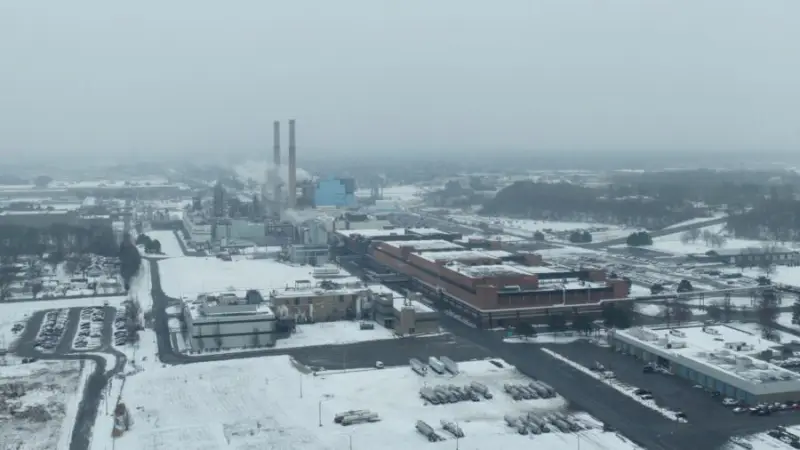
Kodak’s motion picture film business is growing, but the latest figures show why a major production can matter even when the company’s overall gains come from several product lines. The Odyssey, shot entirely on KODAK 65mm film, returns to theaters on December 11, including IMAX 70mm engagements. Its scale puts film stock, processing capacity and delivery lead times into practical focus.
The film’s return and Kodak’s financial results are separate developments. CEO Jim Continenza did not mention The Odyssey during the company’s earnings call. Taken together, though, they offer two useful measures of film’s current position: Kodak says motion picture volumes increased, while a single large production used more than two million feet of 65mm negative.
Kodak’s fifth consecutive quarter of growth
Kodak reported third-quarter revenue of $276 million, up 3% from $269 million a year earlier. Gross profit increased 7% to $73 million, and GAAP net income reached $21 million, compared with $13 million. The company had $317 million in cash at the end of September. Long-term debt stood at $108 million, down from $208 million at the end of 2025. This was Kodak’s fifth consecutive quarter of growth.
The results show different directions across the company’s businesses. Advanced Materials and Chemicals, the segment that includes film, grew 21% to $99 million, or more than a third of total revenue. Print remained the largest segment at $165 million, despite a 7% decline. Continenza described Advanced Materials and Chemicals as “our fastest growing, most profitable unit.”
Motion picture film’s share of the increase
The growth in the segment does not all come from cinema stock. Kodak’s quarterly filing attributes $8 million of its $17 million revenue increase to higher volumes in Industrial Film and Chemicals, and another $7 million to higher prices in those products. Increased Motion Picture volume contributed $1 million. For the first nine months of the year, the company attributed $2 million of additional revenue to Motion Picture volume and $2 million to price. Kodak does not report a standalone revenue total for motion picture film.
That detail gives Continenza’s comment that Kodak continues “to see growth in motion picture films” a useful scale. The increase is real, but modest in dollars beside the segment’s broader gains. On the earnings call, he also said, “Film continues to be the capture medium of choice for major features,” naming Sense and Sensibility and Digger, which was shot on KODAK film in VistaVision. His comment about selling a range of films directly to distributors referred to still film.
The filing also describes constraints that productions need to factor into planning. Demand for consumer film, equipment limits and labor shortages had contributed to backorders; Kodak said added staff and equipment had reduced them. The company cautioned that further growth in demand may put pressure on manufacturing equipment and staffing without additional investment. Planned capital spending for 2026 is $30 million to $35 million.
What The Odyssey shows about 65mm production
Universal says The Odyssey will return to more than 1,000 screens in the U.S. and Canada across formats, including IMAX and IMAX 70mm. The studio reports North American gross revenue of $626 million and worldwide gross revenue of $1.80 billion, making it the highest-grossing film for Universal and director Christopher Nolan. The number of IMAX 70mm venues and the length of the return engagement have not been specified.
IMAX reported that the film earned more than $550 million at the worldwide box office in its theaters, its highest-grossing release, accounting for more than 30% of the film’s global total. Dune: Part Three opens on December 18 and is booked into IMAX theaters, so the return engagement’s IMAX window may be brief.
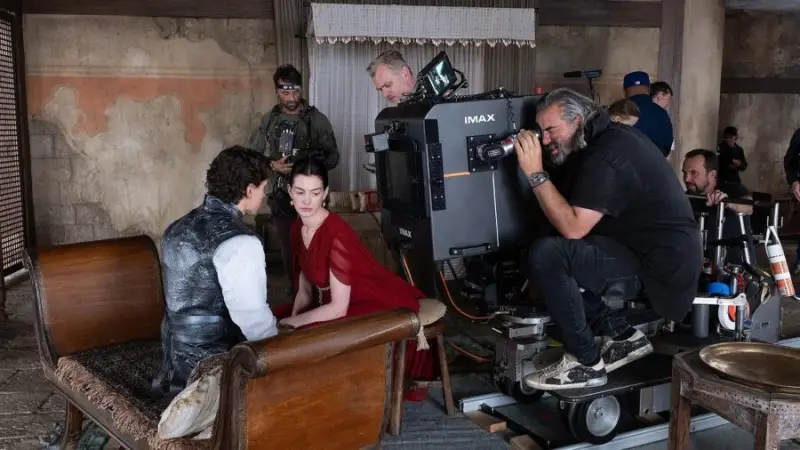
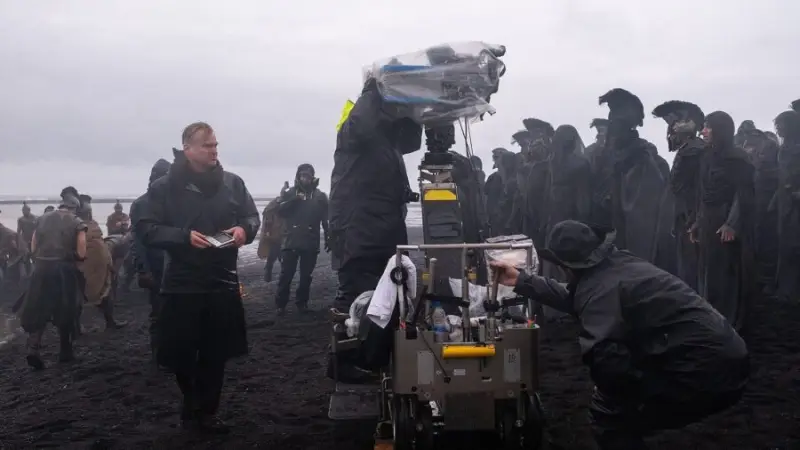
Kodak’s production report says The Odyssey used more than two million feet of 15-perf 65mm negative, equivalent to 379 miles or about 610km. FotoKem in Burbank processed all of it. A single IMAX 70mm print weighs about 600 lb (272kg) and runs roughly 11 miles (17.7km). Those figures make clear that shooting on 65mm requires planning for both negative stock and the physical demands of print distribution.
Kodak’s U.S. price list puts a 1,000 ft (305m) roll of 65mm VISION3 500T at $1,660. Applying that list price to two million feet gives an estimated $3.3 million in negative stock, before processing and any production discount. That is a calculation based on the published price, not a reported production budget or a figure from Kodak or Universal. It does show how a single feature at this scale can be significant against a business line that added one or two million dollars in quarterly revenue.
Ordering stock requires more lead time
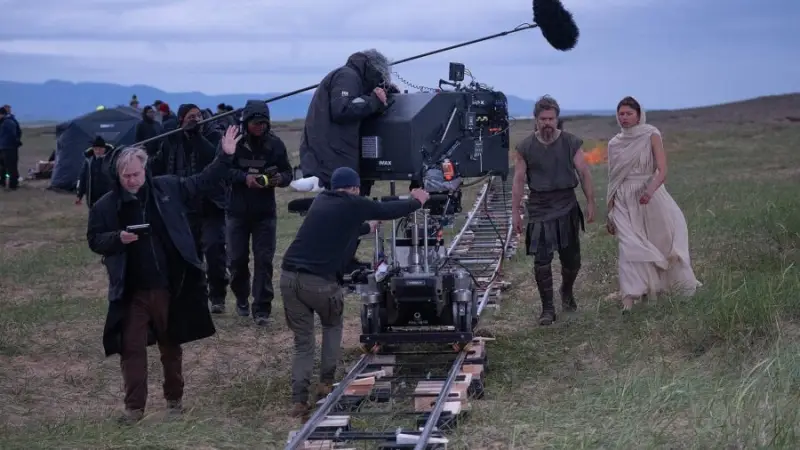
Kodak’s ordering terms for 65mm have changed. Since January, 1,000 ft rolls of VISION3 500T and 200T in 65mm have been finished to order, with a minimum purchase of 16 rolls, up from one roll previously. Kodak gives estimated delivery times of about three weeks in the U.S. and Canada, and about six weeks in Europe and Asia.
Those terms are manageable for a large production with a schedule and stock commitment in place. A smaller project seeking only a few rolls has less flexibility, especially when delivery windows overlap with lab scheduling. Kodak continues to add film products: it introduced KODAK VERITA 200D in the spring, and at this year’s Cannes festival counted twenty productions shot on its film.
For cinematographers weighing a film shoot, Kodak’s improving finances offer reassurance about the supplier, while its own filing and ordering terms point to the practical limits: factory capacity, staffing and lead times. The Odyssey’s return gives audiences another chance to see a large-format film presentation, but productions planning their own 65mm work still need to secure stock well ahead of the shoot.


