Neyrinck V-90 Complete Brings 24 Yamaha SPX 90 Effects to DAWs and Live Sound
Neyrinck’s five-plugin bundle models 24 SPX 90 effects, with AAX DSP support for most of the collection and a $99.99 introductory price.
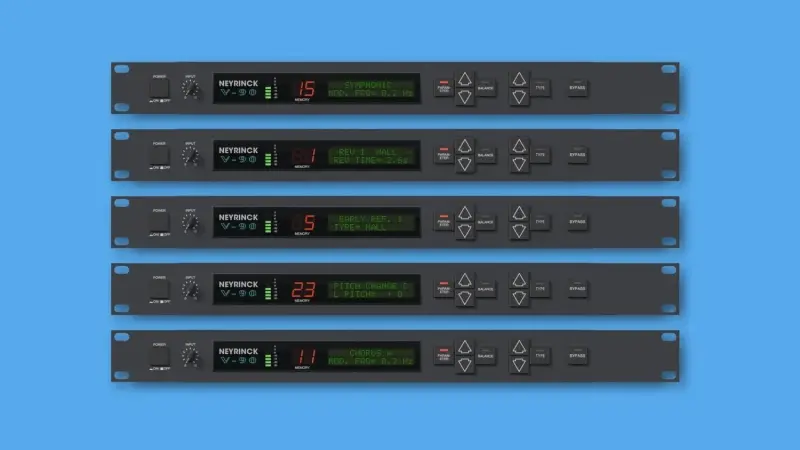
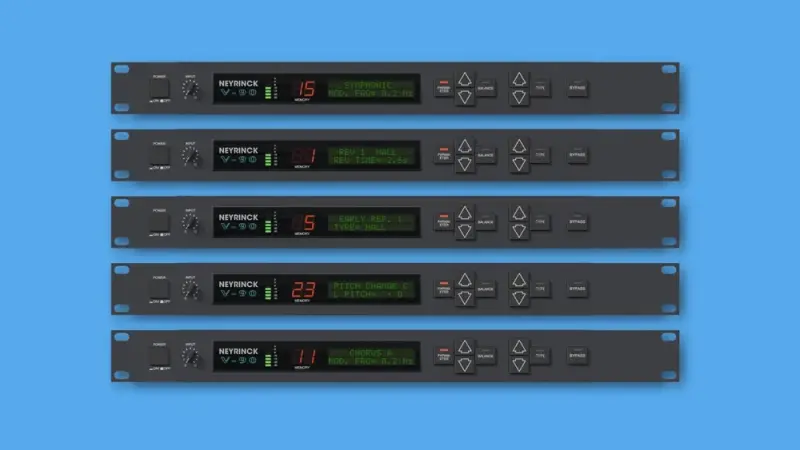
Neyrinck’s V-90 Complete packages 24 effects from the Yamaha SPX 90 in five plugins, extending the company’s existing V-90 Symphonic with reverbs, reflections, pitch effects and modulation tools. The draw is the breadth of the collection, but also its attention to the SPX 90’s limits: Neyrinck says each effect is modelled around the hardware’s 31.25 kHz internal sample rate and 12 kHz bandwidth. That points to a deliberately bounded recreation, rather than a modern effect with an SPX-inspired label.
The bundle is aimed at both studio and live workflows. It supports AAX DSP as well as native plugin formats, making most of the collection available in Pro Tools HDX systems and on Avid VENUE consoles. There’s one important exception: V-90 Reflections is still being developed for AAX DSP, so its effects currently run as AAX Native in Pro Tools and aren’t available on VENUE.
Five plugins cover 24 SPX 90 effects
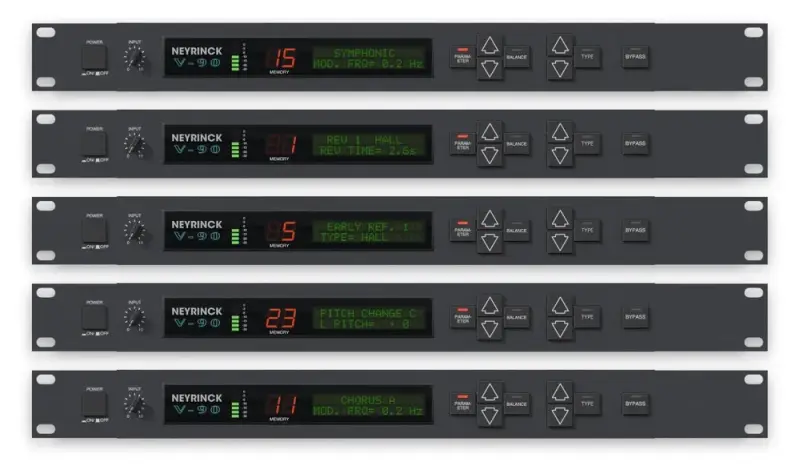
V-90 Complete includes V-90 Symphonic, V-90 Reverbs, V-90 Reflections, V-90 Pitch Change and V-90 Modulations. Symphonic, Neyrinck’s first SPX 90 model, carries over unchanged, with its MOD. FRQ and MOD. DEPTH controls. The four additions fill out a broader set of familiar effects and give users several ways to bring the unit’s sound into current sessions.
V-90 Reverbs contains Rev 1 Hall, Rev 2 Room, Rev 3 Vocal, Rev 4 Plate and Reverb & Gate. V-90 Reflections groups Early Ref. 1 and Early Ref. 2 with Gate Reverb and Reverse Gate. Those shorter, more shaped effects can help place a source in a small space or add a more abrupt tail; their use here follows the SPX 90’s distinct effect designs rather than treating every option as a variation on a conventional reverb.
Pitch Change A, B, C and D make up the pitch plugin. Pitch Change C is the stereo micro-pitch doubler, a common choice for widening vocals or guitars. Pitch Change A and D can be played from a MIDI keyboard, which gives musicians a performance-oriented way to use those effects.
V-90 Modulations adds ten options: Delay L,R, Stereo Echo, Stereo Flange A and B, Chorus A and B, Stereo Phasing, Tremolo, Auto Pan and Delay Vibrato. MIDI notes can trigger Delay Vibrato. For engineers, that range means a single plugin can cover several modulation and delay tasks, while keeping the individual SPX 90 effects available by name.
The model keeps the original’s bandwidth
Neyrinck says it profiled and modelled each SPX 90 algorithm separately at the hardware’s native 31.25 kHz rate. That matters because the unit’s character is tied to more than its effect labels: its 12 kHz bandwidth shapes the high end, contributing to the darker presentation associated with the original. The plugins support standard session rates of 44.1, 48, 88.2 and 96 kHz, while retaining that bandwidth as part of the modelling.
Company founder Paul Neyrinck says his DSP background helped him “recreate how each algorithm really behaves.” He also describes porting the algorithms to AAX DSP for HDX and Carbon systems as a separate engineering challenge. That support broadens where the effects can be used, though the current AAX DSP gap for Reflections means live users won’t yet have the complete set on VENUE.
The live applications are familiar ones: front-of-house engineers have used SPX 90 effects to add depth and width to vocals, drums and bass. V-90 also runs on Fourier Audio’s transform.engine through VST 3. For studio use, the collection’s early reflections, gated effects and reverse treatment offer different approaches to shaping a source; shoegaze guitarists, for instance, have used those kinds of effects to build dense layers.
Neyrinck says a multi-platinum rock producer, whose name it hasn’t shared, called the SPX 90 reverb a secret weapon on hit records. That remains an attributed endorsement, but the practical point is clearer in the available effect list: the bundle combines room and plate reverbs with gates, reverse effects, pitch shifting and modulation in one family of plugins.
Formats, systems and pricing
On macOS, the plugins run in AU, VST 3, AAX Native and AAX DSP formats on Apple Silicon and Intel systems, starting with macOS 10.13. Windows support covers VST, VST 3, AAX Native and AAX DSP on 64-bit Windows 10 or later. The supported session rates are 44.1, 48, 88.2 and 96 kHz.
V-90 Complete is available for $99.99, reduced from its regular $139.99 price through December 5, 2026. Existing V-90 Symphonic owners can upgrade for $49.99, compared with the regular $99.99 upgrade price, through the same date; the Symphonic licence must be in the user’s iLok account.
Individual purchases are also available. Reverbs and Reflections are sold together for $69.99, while Symphonic, Pitch Change and Modulations each cost $49.99. The bundle includes four perpetual iLok licences: Reverbs and Reflections share one licence, and each licence allows two activations using an iLok USB key or a machine licence. No subscription is required, and a built-in trial can be started for the whole bundle from any one of its plugins.
For engineers weighing the collection, the main workflow check is the Reflections format gap on live systems. The other plugins bring the SPX 90’s 24 effects into a broad range of DAW and live setups; buyers who need Early Ref., Gate Reverb or Reverse Gate at front of house will need to wait for AAX DSP support.