Breaking Into Audio Post: Career Advice on Skills, Studio Work and Freelancing
Experienced mixers and sound editors share practical advice on training, contacts, deadlines, room calibration and building a sustainable career in audio post.
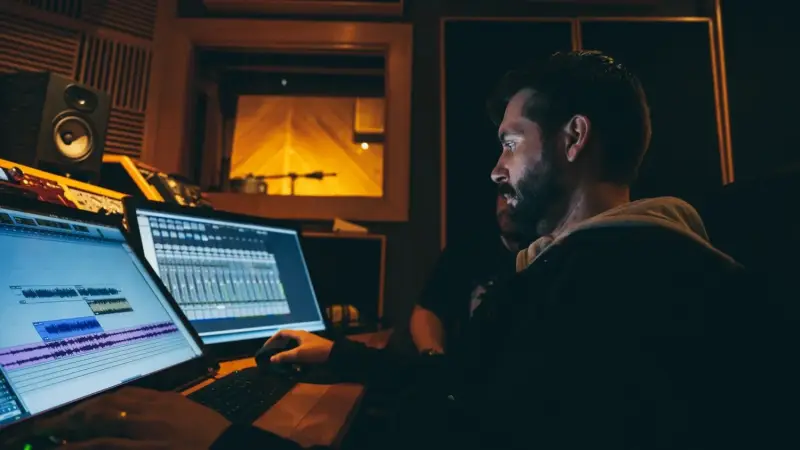
Audio post careers are built through more than software fluency. The people who last learn how studios work, listen carefully to clients and colleagues, deliver on tight schedules, and make themselves useful before an opportunity arrives. Experienced mixers, sound editors and facility owners also stress that there’s no single route in: formal study, entry-level facility jobs, production work and independent projects can all help, provided they lead to practical experience and trusted relationships.

The advice below comes from professionals whose paths range from running at a facility to supervising sound, mixing for film and television, building a business and working across games and other media. Their views differ on when to freelance or accept low-paid work, but they share a consistent point: learn the craft in real working conditions, and treat people well along the way.
Learn the room, the tools and the people
Damian Kearns
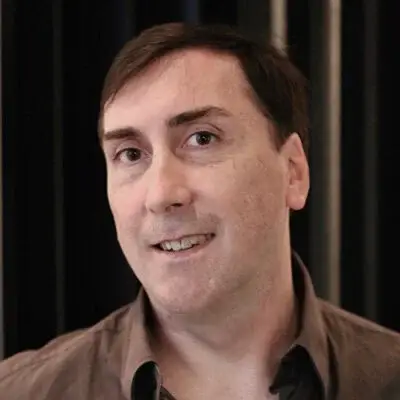
Damian Kearns has treated audio post as a calling since his first job in 1995. His early years took him through several Canadian facilities, where he saw how much practical knowledge sits beyond the job title. His first recommendation for someone preparing to interview is simple: learn the manuals for the equipment and software the facility uses. If that information isn’t available, ask what tools are in the room.
Reading a manual from beginning to end can reveal how a manufacturer expects a system to be used, not just where a particular button lives. Kearns says that familiarity has helped him solve problems quickly on the floor and speak with engineers and managers in terms they understand. That preparation gives an applicant a stronger foundation than a list of software names alone.
He pairs technical preparation with a quieter skill: listening. In a meeting with a prospective employer or client, Kearns tries to get the other person talking about their work and priorities. The exchange can reveal how that person operates, while making space for useful advice. Talking through every skill at once may feel like demonstrating enthusiasm, but it can shut down a more revealing conversation.
Kearns also argues that new entrants should talk directly about compensation. He avoids unpaid work except for charitable projects, and says freelancers he hires are paid fairly and credited for their contributions. Someone who wants to observe, assist or take on a task should explain what they can do, what they hope to learn and what pay they expect. Otherwise, a potential employer may not know whether the visitor is seeking a job, a placement or an informal tour.
He applies the same seriousness to every assignment, no matter how small. His favourite job, he says, is the one he is working on now. The approach serves clients and colleagues, but it also builds a reputation for dependable work. Kearns rejects the idea that post-production is a production line where tasks can be treated as interchangeable; the quality of the work and the care brought to it still matter.
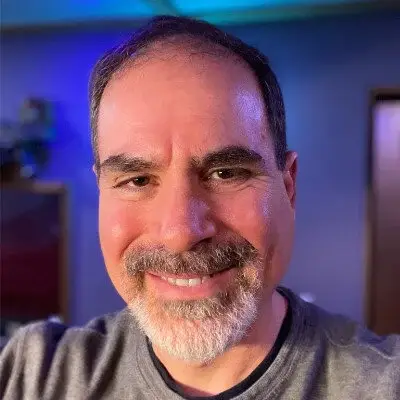
Career movement takes judgment, too. Kearns’s first three jobs fell within three years, and he stayed no longer than 14 months at any of them while learning as much as he could. His next role, at the Canadian Broadcasting Corporation, lasted 15 and a half years. The scale of its operation, with ten floors above ground, four below and a nationwide network, offered years of new experience. He moved on once he felt he had gained what he could.
Now fully freelance, Kearns has spent eight years building a studio, regular clients and a solid reputation. The path included gathering knowledge, making contacts and helping design or build at least 12 rooms and a couple of mobile trucks. His point for aspiring freelancers is that independence is a long build, not a quick exit from employment. It takes time to develop the skills, network and business base to support it.
Garrard Whatley
Garrard Whatley reached post sound by moving through several kinds of production work. He spent more than a year on set, advancing from production assistant to first assistant director and taking on jobs such as set dressing, props, grip, lighting and craft services. He then spent about a year in post, moving from post-production assistant to post supervisor.
That variety helped him see how departments depend on one another. As a post supervisor, he toured sound and picture facilities, asked technicians and artists questions, and sometimes sat quietly in the back of a working room. The people at the console often began explaining what they were doing. He also asked for book recommendations, using those conversations to learn the history and technical foundations of post before starting an independent sound company.
Whatley says there isn’t a single route into the business. His path let him test different jobs, observe how experienced people worked, meet collaborators from different backgrounds and learn from people generous with their time. He sees relationships as valuable, but preparation matters just as much. Knowing the right person may open a door; being ready to do the work and proving dependable are what help someone stay in the room.
Chance encounters can lead somewhere, too, whether at a gathering or in a casual conversation with someone wearing a THX shirt. Whatley’s practical qualification is to be ready when those moments happen. A connection is more likely to become useful when you can describe your skills, interests and availability clearly.
His advice on monitoring and delivery is similarly grounded in the work. Early in his career, Whatley focused heavily on whether a room matched target readings on an SPL meter or Dolby output plot. Standards matter, but he found that treating the figures as absolute instructions could make the listening space feel too restrictive. He now describes film, television and web sound as different sized yards: each format allows different room for the mix, and technical standards mark the boundaries.
Film demands the closest attention to level and equalization because the mix needs to translate to a theatrical environment. When possible, comparing a tuned room with a large theatrical stage can reveal whether the mix travels as intended. Whatley found that lowering his own room by 1 dB gave him a better match.
For television, he says equalization remains important while monitoring level can be more subjective. He notes that his room needed to be 6 dB lower for TV. At first, material at -24 LKFS, also expressed as LUFS, sounded too hot to him when the room was calibrated to 79 dB. Rather than continually compensating by feel, he lowered the room to a comfortable listening level. That change helped him listen through the mix and hit -24 without repeatedly checking meters. He also recommends checking parts of a TV mix on low-end speakers or an actual television when translation is in doubt.
Web work calls for a more substantial reduction in room level and leaves less headroom. Whatley finds that balance decisions may then depend more on frequency relationships, such as dialogue against music or effects, than on overall level. He sees web mixing as the closest of the three formats to music mixing. His takeaway: tune a room to the relevant standards, then make informed adjustments for the work and the listener.
Whatley owns Seismic Post Audio in Los Angeles and has worked for 24 years as a supervising sound editor and re-recording mixer. His work includes independent films, larger film productions and television series. The facility also develops software intended to speed up Pro Tools session organization and navigation.
Make yourself useful before the opening appears
Graham Kirkman
Graham Kirkman recommends getting inside a post company, even if the first role isn’t in sound. A runner position can put someone near the mixers and the everyday rhythm of a facility. Make your interest in audio clear, teach yourself the DAW the company uses and let people see that you’re putting in the time. Enthusiasm helps, he says, but the person who gets a chance still needs to be ready to deliver.

Kirkman wishes he had moved among employers more often early in his career, partly to meet a wider range of people. He also emphasizes that post work rewards sound judgment about time. An editor who spends too long polishing one section may leave a session incomplete. If a mixer receives eight hours of tracklaying with a few audible edits, that may be more useful than a technically immaculate start that runs out of time before the full job is done.
He advises newcomers to keep perspective as well. A television programme can carry real deadlines and demanding creative work, but it isn’t a matter of life or death. Staying calm helps people make decisions and work well with the rest of the team.
Kirkman has mixed, tracklaid and recorded voiceovers for more than 25 years across features, advertising and other formats. He started Luminol Audio Ltd. in September 2016.

Jamey Scott
Jamey Scott sees more routes into sound work than earlier generations had, spanning streaming, games, online video and virtual reality. The formats shift, but he believes the foundations remain: craft, continued learning and the kind of character that makes colleagues want to hire you again. In his view, kindness is part of professional competence, not an optional extra.
A broad skill set can help someone adapt as the work changes. Scott encourages sound professionals to learn beyond a narrow job description and to set a long-term goal of working independently. That means understanding the business side, developing a client roster and, for those who want a facility, learning how to operate one. Independence also involves helping other people develop their own careers.
He doesn’t dismiss the value of bosses and mentors. A structured workplace can teach the pace, standards and habits of a professional operation. But Scott believes those experiences can eventually support a more independent career, as new opportunities emerge outside traditional facility structures.

Scott works across sound design, re-recording, dialogue editing, ADR, Foley, composition and game audio implementation. His credits include independent films, animated shorts and games associated with WB, Sony Pictures, Riot Games, Google ATAP, 2KGames and Epic Games.
Karol Urban
Karol Urban’s approach to networking starts with a change in wording. Instead of asking someone to hand over a job or an opportunity, ask what they need and how you can help. That shifts the conversation from a request for a favour to a possible solution for a real production problem.
She recommends studying the careers of people whose work you admire. Learn where they started, what choices helped them progress and what their path involved. Their experiences can offer practical guidance, though no career can be copied step for step.
Urban also wishes she had recognized earlier that being paid to mix already counts as professional success. She spent years waiting to feel established, even as she improved with each project. Recognizing that progress sooner, she says, could have helped her build confidence and develop more deliberately.
Not every client sees a mixer as a creative partner. Some treat the job as purely technical, even when the mixer has substantial experience. Urban’s recommendation is to seek varied projects and teams, and to build relationships with filmmakers who value sound as part of storytelling. The mixer’s role is to help realize the filmmaker’s vision, not replace it with their own.
Urban mixes television and feature films, with a focus on dialogue and music as well as experience with effects and single-mixer productions. After working mainly on documentaries in Washington, DC, she moved to Los Angeles and found particular satisfaction in scripted work.

Kevin Dallas
Kevin Dallas works from a home studio and says that setup doesn’t make it easy to train newcomers. He points to courses as a useful way to build a foundation in post-production and sound design, while emphasizing that a qualification won’t teach every part of the job. Newcomers should expect to start in an entry-level facility role and learn through production deadlines, client interaction and work with talent.
The pace is part of the craft. Mixing half an hour of television in eight hours for same-day delivery requires choices and habits that are hard to absorb from coursework alone. Dallas’s advice is to meet people and be easy to work with. A strong skill set and expensive studio won’t help much if nobody knows you or trusts you with a project.
Build connections throughout a career, not just with people who already have hiring power. A runner today may take on a different role later and remember someone who treated them well. Dallas has 20 years in film and television and works remotely from his custom-built garden studio, The Dubshakk, providing sound design, mixing, recording and editing across a range of genres.
Build a career around craft, credit and creative judgment
Nathaniel Reichman
Nathaniel Reichman’s advice begins with a distinction between providing a service and owning part of the work. In the early 2000s, while working as a music librarian for film composer Michael Small, he arrived at Clinton Studios in New York with suitcases of sheet music for an orchestral session. An experienced orchestra contractor told him, “Hey son, there’s no money in music, you know that, right?” Reichman now reads that remark as a warning about services, not a reason to leave the field.
Mixing, mastering, production and other client work are services. In many cases, the client is closer to ownership of the intellectual property than the engineer or producer providing the work. Reichman encourages young professionals to look for ways to take part in ownership, even on a small scale. He names performing rights organizations such as ASCAP, SESAC and SoundExchange, and recommends considering how a contribution might be included in the royalty chain.
That doesn’t replace the need to develop strong audio skills or client relationships. It adds a business question that can be easy to miss while building a service career: who owns the work, and how is each contributor credited? Reichman’s point is that ownership may provide additional income when project work slows, so it’s worth understanding how rights and credits apply to your own contributions.
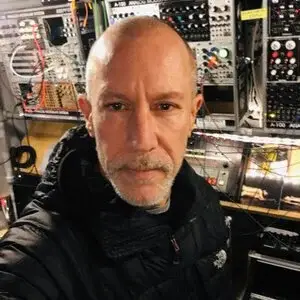
Reichman is a New York-based producer and mixer whose work spans television, film, advertising and classical music. He is lead mixer at Dubway Studios and a Grammy-nominated professional.
Paul Maunder
Paul Maunder recommends specialized training for people who need a structured foundation in sound for visual media. When evaluating courses, he suggests checking whether the instructor is active in the field, then putting substantial time into practice beyond class. Employers may care more about what an applicant can do than the name of a course, but instruction, feedback and hands-on equipment experience can help build the speed and confidence needed for production work.
Early low-paid or unpaid projects can also provide practice and material for a showreel, but Maunder urges newcomers to be selective. Treat those jobs as a chance to gain experience, not as a promise of exposure. If a project offers little beyond vague claims that it will raise your profile, it may not be worth the time.
He generally advises against going freelance immediately. Newcomers often lack a proven track record and the client base needed to keep work coming in. A staff job can provide regular income, room to improve and contact with producers, editors, composers and directors. Those relationships may support a move to freelance work later, once the person has a stronger body of work and a clearer sense of the business.
Maunder also recommends considering Avid’s accredited Pro Tools courses. Certification may not appear on every employer’s checklist, but structured training can reveal faster workflows and features that someone might miss by learning through trial and error. A teacher can answer questions that a manual alone can’t anticipate.
His own experience illustrates both sides of learning. At a small video production company, Maunder was the only sound person when the business installed a Pro Tools 24 Mix system. The setup used Mix Core and Mix Farm DSP cards. After a 30-minute introduction from the equipment supplier, he had to work out the signal path himself: voiceover booth to a Tascam TM-D8000 digital mixer, through an ADAT Bridge interface and into Pro Tools. It took two days to get the routing figured out and a couple of weeks to discover that plugins could provide processing such as equalization and compression.

Maunder read the Pro Tools reference guide twice and found it useful, but says a manual can’t provide the practical judgment that comes from an experienced colleague. He values the independence that came from troubleshooting the system, the Mac and the network on his own, while acknowledging that guidance would have saved time. His recommendation is to combine experimentation and reading with opportunities to learn from experienced people. He is a certified Pro Tools expert in post sound and also works on location, leading film shoots.
Rob Walker
Rob Walker sees formal study as a start, not a fast pass. Many applicants will have a degree or professional course behind them, so general computer knowledge, IT, networking and file management can help someone stand out. A runner or assistant role is a common entry point for facility and broadcast work, but the path to mixing can be long, with relatively few assistant mixer positions. Some larger operations promote mix technicians from within.
Walker recommends building relationships while studying or working in entry-level roles. If you eventually freelance, people making productions now may become your first clients. Starting independently is possible, but it can take several years to build enough work to support a full-time living. Many freelancers first gain experience and contacts through staff positions at facilities or broadcasters.
Expect several years of learning on the job. Walker estimates that around five years may be needed to develop the range and judgment required for many kinds of work. Newcomers may overestimate their abilities, as he says he did, but that doesn’t mean they lack ideas or useful skills. They still need to understand how the business works beyond the DAW and loudspeakers. People skills, creative problem-solving and a sense of where the desired work is happening all shape a career.
Opportunities often travel by word of mouth, so being part of the conversations matters. Walker suggests recording sounds every week. Over a few years, that habit can create a personal effects library with sounds you know well, giving you a resource built from your own recording practice.
Walker has more than 25 years of experience in cinema, sound installations and music, working independently and with collaborators. He encourages persistence through the obstacles that come with the work.

Simon Jones
Simon Jones began as a runner, making tea and coffee and waiting 18 months before he was allowed to handle equipment or take on sound work. During that period, he got a chance to do Foley and was later sent to Pinewood to work on Foley for a feature. That experience showed him how a larger production operated.
Jones had no university training, but he had recorded and mixed music on quarter-inch tape from age 12 and experimented with analog synthesizers. That background helped at his interview: when asked to identify a microphone, he knew it was a Neumann U87. His route underlines the value of practical curiosity alongside whatever training a newcomer chooses.
He says new entrants should be willing to take on reasonable tasks around a facility, including jobs that aren’t glamorous. Keeping sound or music as an active pursuit outside work can build familiarity with the craft. Do the homework, expect long hours and aim to do the job well. Jones also passes on a warning from his first boss: never assume anything in this business.
Jones is a BAFTA Cymru award-winning freelance sound designer, dubbing mixer and Foley artist. He works in a small studio equipped with an Avid S6 and Pro Tools, and also composes for television and digital media.
Tim Nielsen
Tim Nielsen grew up in the US Midwest without easy access to Hollywood and went to film school at the University of Southern California. The three years expanded his network, but he says he still learned nearly everything about film sound on the job. He doesn’t tell people to avoid film school; instead, he asks them to weigh it against a genuine entry-level position at a company that will let them learn.
Such jobs can be difficult to find, and some businesses may take a newcomer’s time without offering much in return. Nielsen advises people to make sure their own learning needs are being met and to find a mentor who is willing to teach. Software courses, masterclasses and online training can build technical skills, while work in a post house reveals the pace and routines of the job. He regards internships as a strong route into the field when they provide real access and instruction.
His biggest early misconception concerned equipment. Nielsen says chasing expensive microphones, recorders, equalizers, compressors and reverb plugins cost him money and time. Technology matters, but tools don’t replace judgment or solve the deeper problem of making an effective sound edit or mix. He sums it up plainly: technology is a tool, not the end goal.
Nielsen is a sound designer, supervising sound editor and re-recording mixer at Skywalker Sound. Alongside film work, he records sound effects and writes and teaches about sound effects recording and design.
What carries across the different paths
The panel’s routes into audio post vary, but several habits recur. Learn the systems you’ll encounter, whether through manuals, courses or time in a facility. Listen before pitching yourself. Seek out real production experience, and ask what a role will teach you before giving away substantial unpaid labour. When a chance appears, be ready to contribute at the pace the job requires.
Contacts matter because people recommend colleagues they know and trust. Build those relationships across departments, treat entry-level coworkers with respect and make your contribution clear. Technical skill gets you part of the way; reliability, communication and a willingness to solve problems affect whether people call again.
Finally, keep the client’s goal in view. A mixer or editor may bring craft and creative ideas to a project, but the work serves a story and a client’s vision. Develop your own judgment, keep learning as tools and formats change, and take each paid assignment as evidence that your skills are already creating value.


