Panasonic LUMIX SHX1 Availability, Pricing and Firmware Features by Region
The 6K full-frame LUMIX SHX1 reaches Europe in December 2026, then the US and Japan in January 2027, with key Tilta controls due later.

Panasonic’s LUMIX SHX1 is set to reach European buyers first, with availability from December 2026. The US and Japan are scheduled to follow in January 2027. For crews planning early-year shoots, the practical detail is that the camera’s initial arrival precedes several workflow features shown at launch: app support comes in December, while Tilta control integration is planned for the first half of 2027.
Preorders are open in Europe, the US and Japan, though the timing and listed configurations differ by region. Panasonic has said the camera leaves the factory in December and that most customers should receive it in January 2027. That makes the regional availability dates useful planning guides, but productions with fixed schedules should allow for the gap between factory dispatch and delivery.
Regional availability and prices
Panasonic Connect Europe lists availability from December 2026. CVP is taking orders for the AU-SHX1E body in the UK and EU, but has not provided an exact shipping date. Its listed body price is €5,301.19 or £4,399, including VAT.
In the US, Panasonic lists the body and a kit with the AU-GRP1 control grip and AU-XHU1 XLR handle unit for January 2027. B&H gives an estimated shipping date of January 19, 2027. Its listed price is $4,697.99 for the body and $5,497.99 for the kit.
Panasonic’s Japanese schedule points to a late-January 2027 release, with preorders available through its online store. Prices for Japan are not provided here. The stated dates and prices are regional listings, so buyers should check the relevant seller for current details before arranging a production around delivery.

Recording and connections
The SHX1 is Panasonic’s first compact cinema camera in the LUMIX line. Its 6K full-frame partially stacked CMOS sensor records 24.1 megapixels for video and includes an optical low-pass filter. Panasonic rates the camera at 15 stops of dynamic range in V-Log/V-Gamut with Dynamic Range Boost enabled. That figure is the manufacturer’s rating; independent lab measurements provide a separate view of its performance.
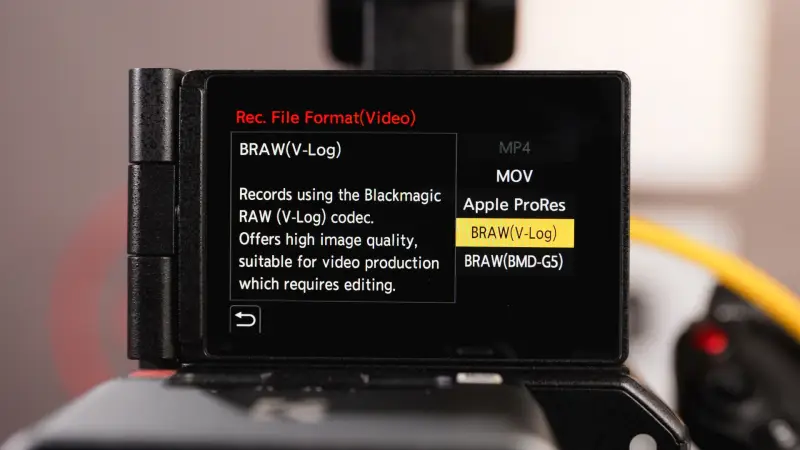
For recording, the camera can send Blackmagic RAW to an external USB-C SSD with capacity up to 2TB. The supported options include 6K 3:2 open gate at 24p, with a slight crop. ProRes RAW HQ and ProRes RAW record internally to CFexpress Type B media. ARRI LogC3 with ARRI Wide Gamut 3 is pre-installed, a first for a LUMIX camera.
The body provides simultaneous 12G-SDI and HDMI outputs, plus BNC timecode input and output. Audio can be captured internally in 32-bit float through the 3.5mm input. Other listed features include a top-mounted monitor with a tilt-free angle, 5-axis in-body stabilization, Phase Hybrid AF with 779 points and micro V-mount battery power. Panasonic specifies unlimited recording up to 4K 120p within the camera’s guaranteed operating temperature range.
In lab testing, Gunther and the test team measured rolling shutter at 26.2ms with Dynamic Range Boost enabled and 12.2ms with it disabled. For 5.8K ProRes RAW with Dynamic Range Boost on, they measured 13.2 stops at SNR = 2 and 14.3 stops at SNR = 1, with 10 stops of exposure latitude. Those results give buyers a measured reference alongside Panasonic’s stated dynamic-range rating.
What arrives after the camera
SHX1 support is planned for LUMIX Flow 1.8.0 and LUMIX Lab 3.2.0 on December 22, 2026. The Flow update adds two camera-specific functions. Smartphone Sync Recording saves a simplified copy of each take to a phone, while Sequential Play plays takes marked as OK in storyboard order. For a solo operator, these tools could make a phone part of the on-set review and organization process, though the camera’s core recording functions are separate from the app features.
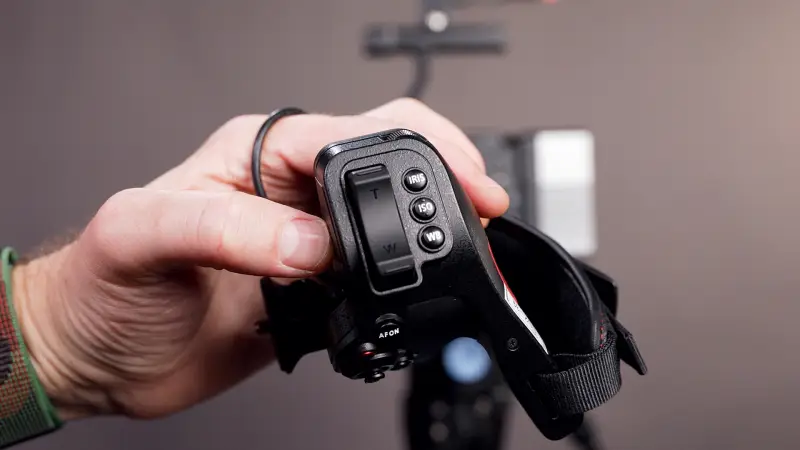
A firmware update planned for the first half of 2027 is set to add control of the Tilta Mirage variable ND from the AU-GRP1 grip and Panasonic controllers. The update is also intended to let users adjust focus and iris on L-Mount lenses with a Tilta hand wheel, without external lens motors. Both functions require a USB-C connection between the camera and the Tilta Nucleus 2.4G Wireless Control Hub (Panasonic). The update is also slated to enable USB Power Delivery charging for a smartphone running LUMIX Flow.
Variable ND control matters because the SHX1 has no internal ND filter. For documentary shooters working alone, an external system that can be adjusted from the grip or hand wheel may reduce the need to reach for a filter during a take. That workflow depends on the planned firmware and the specified Tilta hardware, so buyers who need ND control at delivery should factor the timing into their setup.
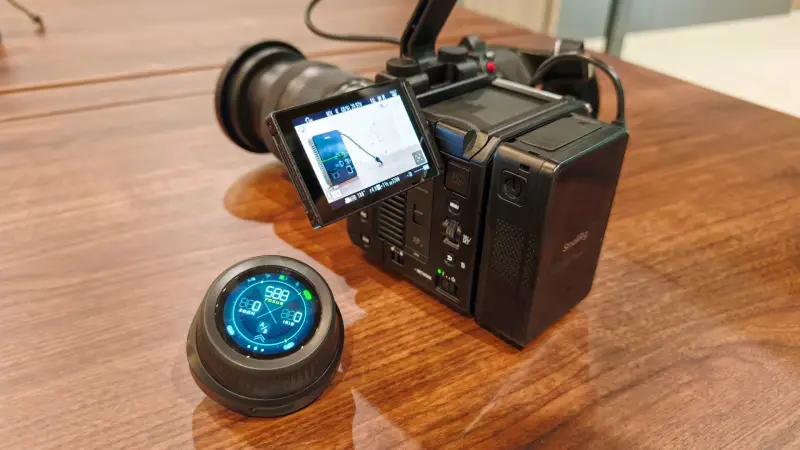
Panasonic also schedules the AU-LPU1 Live Production Unit for the first half of 2027. It adds Genlock IN and PoE++ over LAN for PTZ-style use. A power zoom lens designed for the SHX1 remains in development, with no timing given here.
The buying decision comes down partly to when a production needs the camera and which parts of the workflow matter on day one. The body offers a broad set of recording formats and production connections at launch, while the app additions and Tilta controls arrive on separate schedules. Buyers weighing the listed body and kit prices can also check the SHX1 in the camera database as they plan a compatible recording and control setup.


