Suspense Curves in Film: Waves, Climbs and the Power of a Plateau
From Jaws to Lights Out, different tension curves show how filmmakers build dread, hold it or release it.
A suspense curve gives a filmmaker a practical way to think about the audience’s experience: when tension rises, when it eases, and how long viewers have to anticipate what comes next. It isn’t a storyboard or a shot list. It’s a simple map of dramatic pressure, and its shape can change to suit the story.
The idea of drawing a story’s rise and fall predates cinema. The language of dramatic structure grew out of the theatre, but it remains useful for film because tension depends on timing. A scene needs enough room for expectation to form, and a story needs to decide whether to increase pressure, let it breathe or hold it in place.
Suspense gives the audience time to worry
Alfred Hitchcock’s distinction between suspense and surprise offers a clear starting point. A surprise arrives without warning: the audience learns what happened at the same moment it happens. Its impact is brief. Suspense begins earlier, when viewers know a threat is present and have time to anticipate its consequences, often while the characters remain unaware.
The opening of Touch of Evil puts that principle into motion. A bomb is planted in a car, then the camera follows the vehicle in a long take of roughly three minutes. The audience knows what the people in the scene don’t. That gap between the anticipated event and its eventual outcome is where the tension gathers.
A curve can help a writer or director plan that gap. It tracks how tension, engagement and anticipation shift across scenes. A flat line offers little movement; a suspenseful sequence generally needs some form of build-up before a release. But that movement doesn’t have to be one steady climb.
A steep climb through escalating trouble
One model is the Fichtean curve, described by novelist John Gardner in his 1983 book The Art of Fiction. Where Freytag’s pyramid allows time for exposition before the main rise in tension, the Fichtean approach brings the audience close to danger early. The story then stacks complications, reaches a climax and moves through a short falling action. On paper, the rising section resembles a staircase that gets steeper.
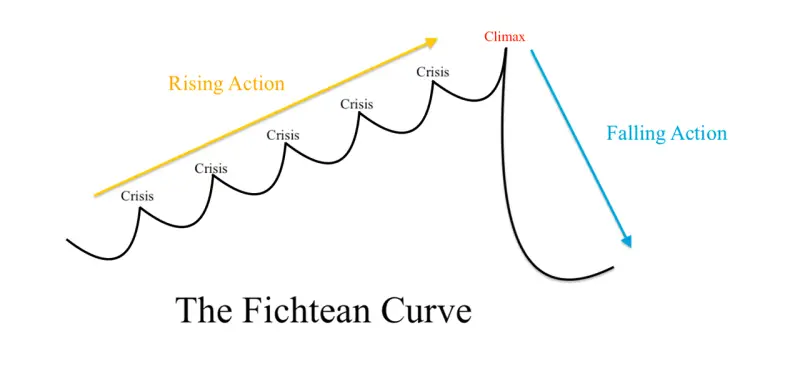
This structure suits stories that want to get moving quickly. Each new problem raises the stakes, so the audience has less time to settle before the next complication arrives. The writer’s challenge is to make each step feel like a meaningful change in the situation, rather than a repeat of the same beat.
Jaws builds tension in waves
Jaws uses a different rhythm. Rather than pushing tension upward without pause, the film gives it repeated rises and drops. Each peak grows more intense, while each lull offers only temporary relief. As the hunt for the shark takes over, the sense of safety steadily disappears.
The shark’s limited screen time contributes to that effect. Director Steven Spielberg has said the mechanical shark repeatedly broke down, forcing him to create fear without relying on a visible creature. The result was a story that could make the audience anticipate the shark’s arrival instead of simply showing it. Spielberg has described the technical problem as helping the film; his account is discussed here.
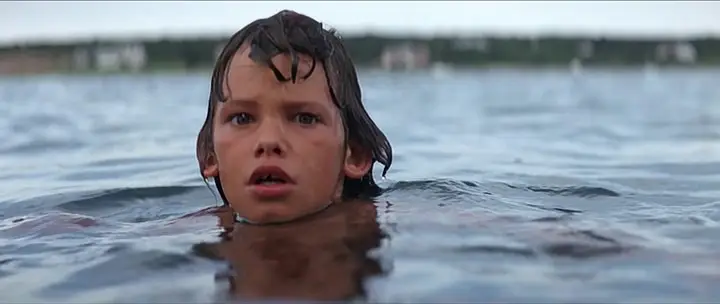
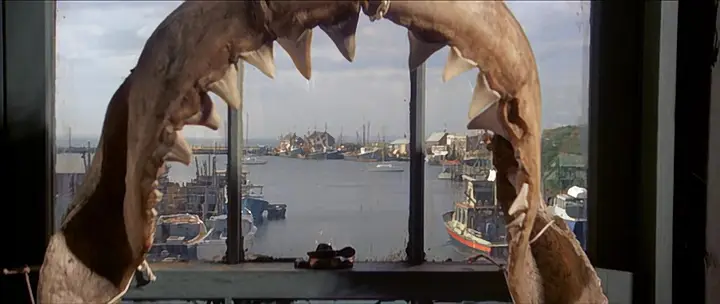
The waves give viewers short stretches to recover, but the film doesn’t let those pauses erase what came before. Each return of danger carries more weight. That pattern can be useful when a story needs variation: a lower point creates contrast, while the next rise tests whether the audience’s sense of safety can hold.
Whiplash keeps pushing
Whiplash takes a more relentless route. Its tension climbs through Andrew’s conflict with his drumming instructor, with few moments that feel like a true return to safety. Even when it seems the pressure might ease, another challenge arrives and pushes the stakes higher.
Director Damien Chazelle has said he wanted the film to be “edited like a drummer had edited it, with fast cuts.” The structure echoes that idea: the story gathers momentum like a performance, moving from the early “Not quite my tempo” exchange toward the final sequence, a performance lasting nearly nine minutes. The tension reaches its peak at the end. That choice makes the release part of the film’s closing movement, rather than a pause before another escalation.
A plateau can sustain dread
Not every suspenseful story needs to climb continuously. In the science-fiction psychological thriller Vivarium, Gemma and Tom reach a state of intense dread early, after becoming trapped in a suburban maze. Much of the film holds them there. The tension doesn’t keep rising through a chain of larger threats; instead, the repetition and their inability to escape become the source of unease.
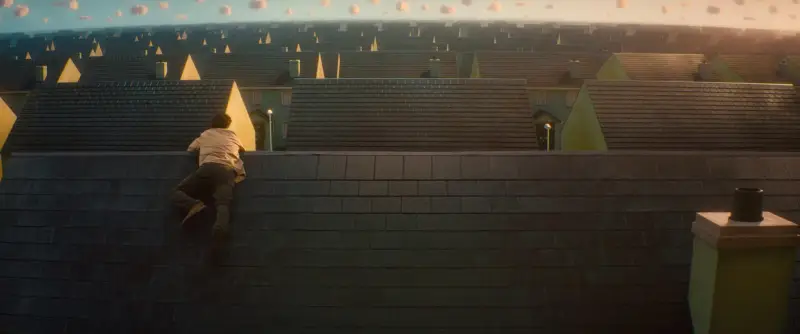
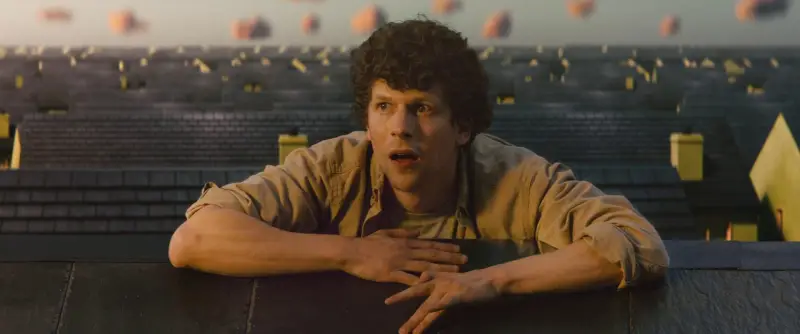

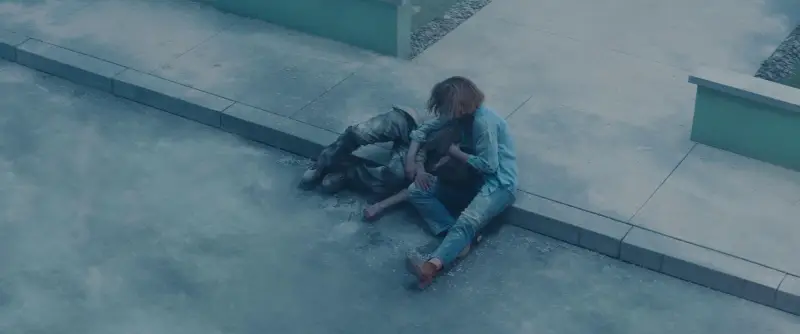
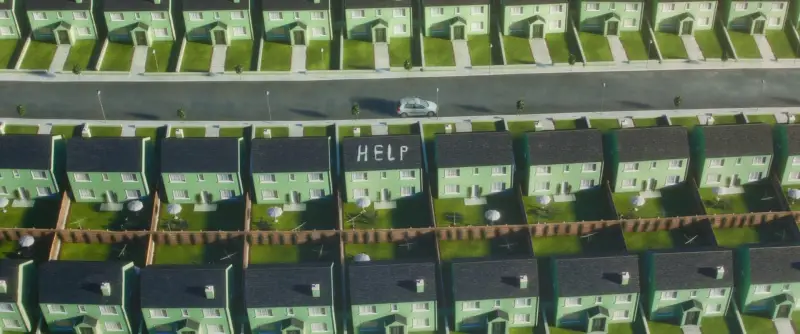
One review calls the repetition “a little too lengthy” and says the film risks seeming like a “one-trick pony.” That response points to the trade-off in a plateau structure: holding a mood can deepen the characters’ confinement, but it can also test the viewer’s patience if the repetition stops changing what the situation means. In Vivarium, the tone eventually shifts and events speed up near the end.
Short films need a concentrated build
Feature films have time to establish a pattern, break it and return to it. A short has fewer minutes to set up a threat and make its consequences land. In a lesson for MZed’s Writing 201 course, filmmaker Seth Worley compares a short-film premise to pulling a thread from a sweater: once the thread comes loose, the unraveling should spread through the whole piece.
You present the sweater, you present the thread, you pull the thread, and you watch the sweater unravel … It’s got to unravel the pants, the carpet, the furniture, the house, and the planet Earth.
The practical implication is to focus on one central problem and keep expanding its consequences. Subplots and slow setup may leave too little room for the central idea to develop. David F. Sandberg’s 2013 short film Lights Out shows how quickly a premise can take hold: within twelve seconds and three shots, viewers understand that something moves closer when the lights go out. From there, the tension rises until the final image, followed by an abrupt cut.
A useful curve isn’t the one with the most dramatic-looking line. A wave, a relentless climb and a plateau can all work if their rhythms fit the story. Sketching the pressure can reveal where tension stalls, where escalation has no room left to grow, or where a scene needs to let the audience feel the consequences before the next beat. The shape is a planning tool; the story determines what it should do.


