Lio Kuokman and Paul Huang Lead Singapore Symphony in Dvořák and Beethoven
Paul Huang’s vivid Dvořák concerto and Lio Kuokman’s fast, tightly shaped Beethoven Seventh made for a commanding Singapore Symphony debut.

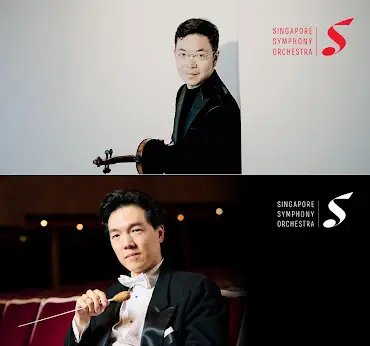
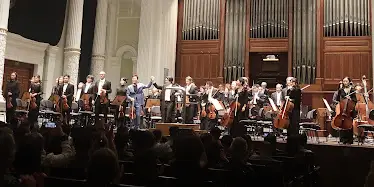
The Singapore Symphony Orchestra’s concert at Victoria Concert Hall on Friday, 20 November 2026, paired two notable debuts with music that rewards precision and strong musical direction. Taiwanese-American violinist Paul Huang made his SSO debut in Dvořák’s Violin Concerto, while Macao-born conductor Lio Kuokman led the orchestra for the first time. The result was a program shaped by vivid contrasts: Unsuk Chin’s compressed Beethoven tribute, the concerto’s lyrical sweep, and a Beethoven Seventh that gathered speed without losing its grip.
The pairing also reflected a change in the orchestra’s guest roster. Asian and Asia-born musicians have become more familiar presences at the centre of international concert life, and here both featured artists brought substantial experience to their first SSO appearances. Kuokman is music director of the Macao Orchestra and resident conductor of the Hong Kong Philharmonic. Huang had previously appeared in Singapore for chamber music and performed Tchaikovsky’s Violin Concerto with the Orchestra of the Music Makers.
Chin’s Beethoven references set the pace
Kuokman opened with Unsuk Chin’s subito con forza (2020), a five-minute work written for the 250th anniversary of Beethoven’s birth. Its title means “suddenly with force,” and the opening makes that idea plain: two emphatic chords, drawn from the start of Beethoven’s Coriolan Overture, arrive with trailing percussion. The piece then darts between busy string writing and sharply voiced wind passages, keeping the orchestra alert to fast shifts in texture and character.
Chin threads in glimpses of other Beethoven works, including the Fifth Piano Concerto, the Fifth Symphony and the Leonore Overtures. Beatrice Lin took on the demanding obbligato piano part associated with the concerto reference. These are flashes rather than full quotations: familiar material appears, changes shape and gives way to the next burst of activity. The ending settles on a peaceful C major chord, a striking release after the piece’s quick changes and forceful gestures.
Huang brings Dvořák’s concerto into focus
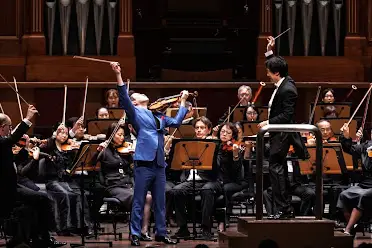
Dvořák’s Violin Concerto in A minor, Op. 53, can sit in the shadow of his better-known cello concerto. Huang’s performance made a persuasive case for hearing its own character. Playing a 1742 Guarneri del Gesù, he drew a large, warm sound that carried through the hall, with a rich vibrato and enough presence to hold its line against dense orchestral passages.
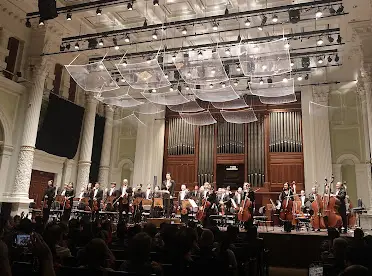
From his first entry, Huang gave the solo part a strong sense of direction. His playing cut clearly through the ensemble without making the concerto feel like a contest of volume. Secure technique and intonation supported the longer phrases, while the central slow movement gave the violin room to sing. The contrast between that sustained lyricism and the concerto’s more active writing helped the performance feel like a continuous musical argument rather than a sequence of display passages.
 |
| Photo: Chris P. Lim |
The finale turned the mood outward. Its buoyant character carried a hint of Brahms filtered through a Slavonic accent, and Huang and the orchestra brought it to a bright, energetic close. After enthusiastic applause, Huang returned with Fritz Kreisler’s Scherzo-Caprice, omitting the piece’s opening Recitativo. The encore offered a compact change of pace while keeping the violin at the centre of the evening.
Kuokman drives the Seventh with control
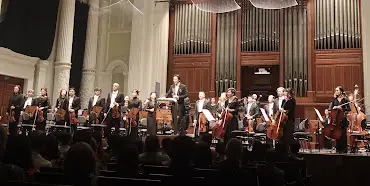
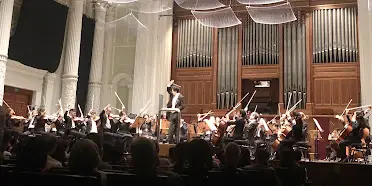
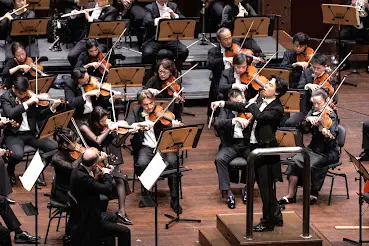
Beethoven’s Seventh Symphony in A major, Op. 92, supplied the second half’s main test of pacing. Kuokman conducted from memory, shaping a taut performance with a clear sense of where each movement was headed. The symphony began with a resonant chord, then its extended introduction built steadily toward the first movement’s Vivace. When the faster section broke through, the orchestra sounded urgent and purposeful, with the transition carrying real momentum.
The second movement’s Allegretto unfolded with breadth and composure. Its variations offered the evening a different kind of intensity: the pulse remained firm, but the music was allowed to gather weight through repetition and changing orchestral colour. Beethoven’s first Viennese audience in 1813 responded so strongly that the movement had to be repeated on the spot. At Victoria Concert Hall, the audience’s silence gave the passage its own kind of emphasis.
 |
| Photo: Chris P. Lim |
Then the pace sharpened. The final two movements came in quick succession, with the orchestra negotiating the fast writing at a level of accuracy that made the speed feel controlled rather than precarious. Beethoven’s rhythmic drive stayed at the centre; the players gave the music propulsion while keeping its ensemble lines clear. That balance matters in this symphony, where sheer velocity can blur the details that make the dance rhythms compelling.
Richard Wagner famously called the Seventh the “apotheosis of the dance,” though Kuokman’s reading suggested a dance too charged for the ballroom. The finale’s rush was exhilarating, but it remained connected to the measured build and rhythmic discipline established earlier. With Huang’s expansive Dvořák and Kuokman’s tightly directed Beethoven, the concert made its strongest impression through contrast: a solo voice opening out against the orchestra, then an entire ensemble moving at speed with precision. ****




