Alexis Cuadrado’s Six Dolby Atmos Albums Bring Jazz, Poetry and Silent Film Scores Into the Room
Cuadrado’s six Atmos remixes trace a distinctive path through jazz, Iberian traditions and film scores, with detailed placement shaped around each ensemble.
Alexis Cuadrado’s six Dolby Atmos releases make a strong case for treating immersive mixing as part of the arrangement. Across jazz quartets, spoken-word settings, chamber groups and a live score for a silent film, the bassist and composer uses the room to clarify musical relationships and deepen the sense of ensemble. The mixes are available as high-resolution Dolby TrueHD MKV downloads through ImmersiveAudioAlbum.
The completed series brings together six albums from Cuadrado’s catalog that he controls. It also closes a project he began more than a decade ago: a body of work that connects jazz with Iberian and other musical traditions, poetry, social commentary and film. For Cuadrado, revisiting these records as an Atmos mixer has been a practical education in his own writing. The results reveal a consistent approach—give each instrument room, use the full soundfield with purpose, and keep the music’s shape in view.
From Barcelona to a Brooklyn studio
Cuadrado arrived in New York City in 1999 after establishing himself as a bassist in Barcelona’s jazz scene. That scene brought together a new generation of Catalonian musicians shaped by the influence of “Nuevo Flamenco,” including the music of Paco de Lucia and Chano Dominguez, with young American players who had come to Spain. Brad Mehldau and Kurt Rosenwinkel were among the musicians in the orbit of Fresh Sound Records’ New Talent roster, where Cuadrado also recorded.
His labelmates urged him to try New York. The move proved difficult, but he stayed, building a career as a sought-after sideman and bandleader. He joined the jazz faculty at Manhattan’s New School and co-founded the Brooklyn Jazz Underground, a musician-led collective and record label focused on original work by artists from across the United States and elsewhere.
His credits include work with Angélique Kidjo, Youssou N’Dour, Dianne Reeves, Kenny Barron and Jon Batiste. In recent years, composition and arranging have taken up more of his time. He has written for dance companies, chamber groups, jazz orchestras, film, radio and digital media; his music has also appeared in podcasts produced by Slate, Pushkin, Condé Nast and WNYC.
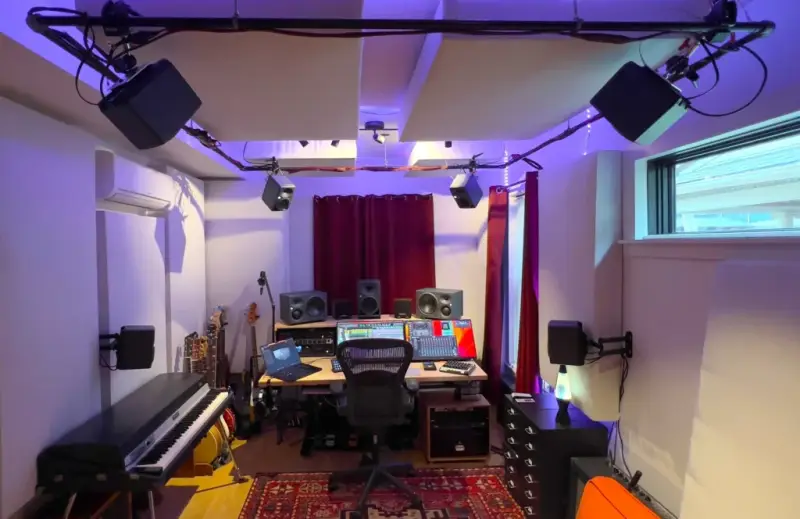
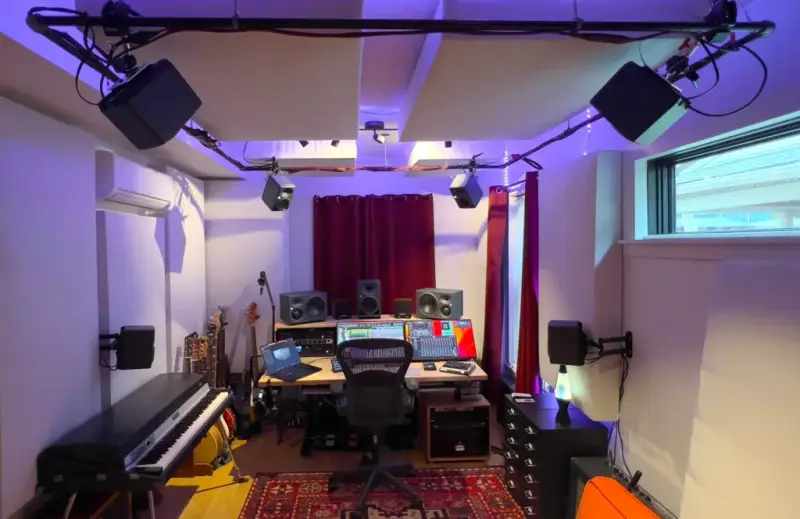
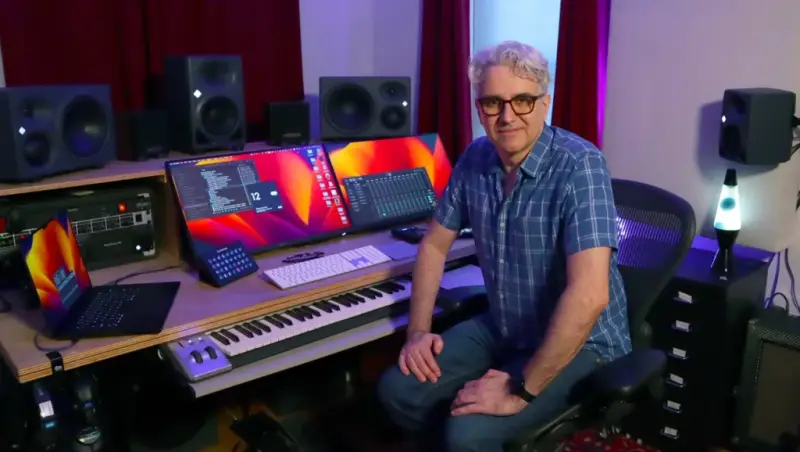
Since the pandemic, Cuadrado has put more energy into audio production and engineering. He designed and built The Plaza Roja, his home studio, and equipped it for Dolby Atmos. That work gave him the chance to approach his own recordings from a different position: listening not only as the composer who knows how the parts fit, but as a mixer deciding how those parts should occupy a room.
A catalog built from musical crossings
Cuadrado’s interest in social themes grew from his experience as a working New Yorker during the 2008 financial collapse and the Occupy Wall Street period. He also looks to musicians such as Charles Mingus and Charlie Haden, who brought social commentary into complex instrumental music. His own perspective reflects his identity as an immigrant and his reckoning with Spanish cultural and family history, including relatives involved in anarchist, syndicalist and anti-fascist movements.
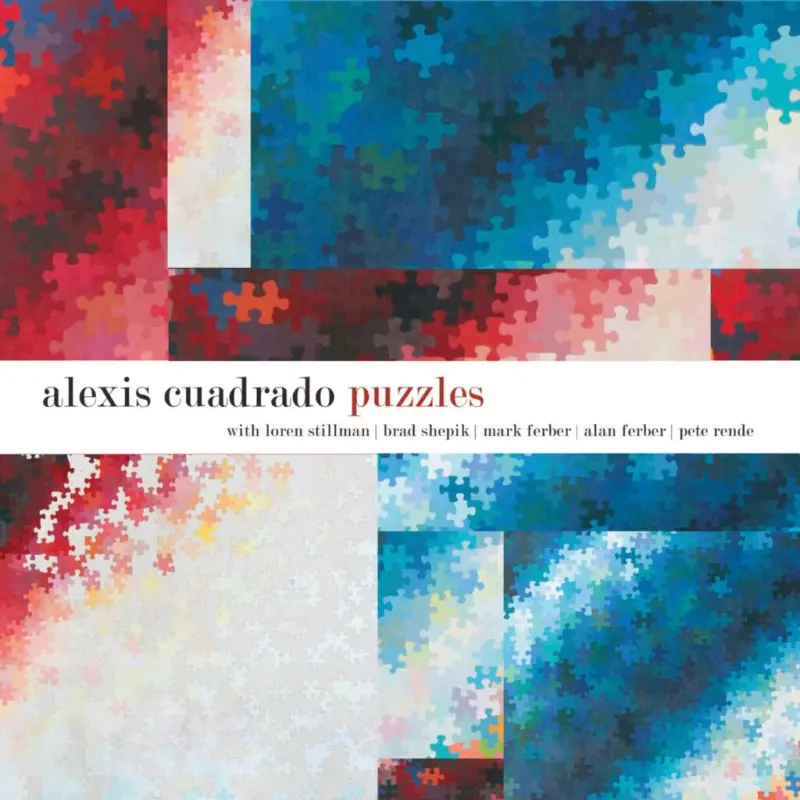
That inquiry developed alongside a musical process Cuadrado has described as “decoding and recoding”: taking apart the musical languages he inherited, including flamenco and other Spanish folk traditions, then reshaping them through jazz, pop, new music and music from around the world. His first American quartet album, Puzzles (2008), was recorded in his Brooklyn living room with a close group of fellow musicians. It set out an informal, collaborative sound that would lead to a broader exploration of rhythm, harmony and arrangement.
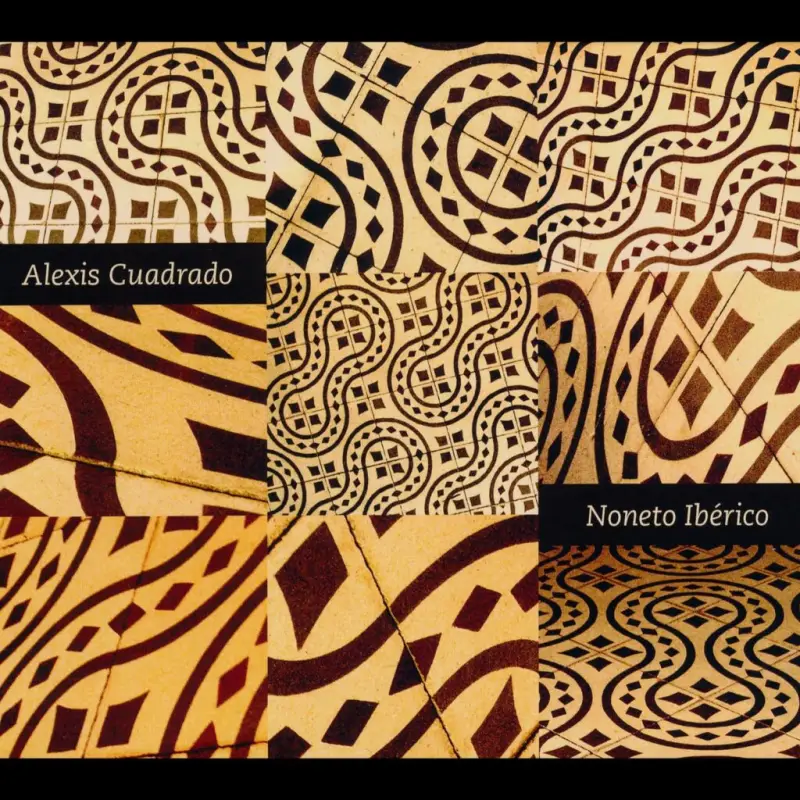
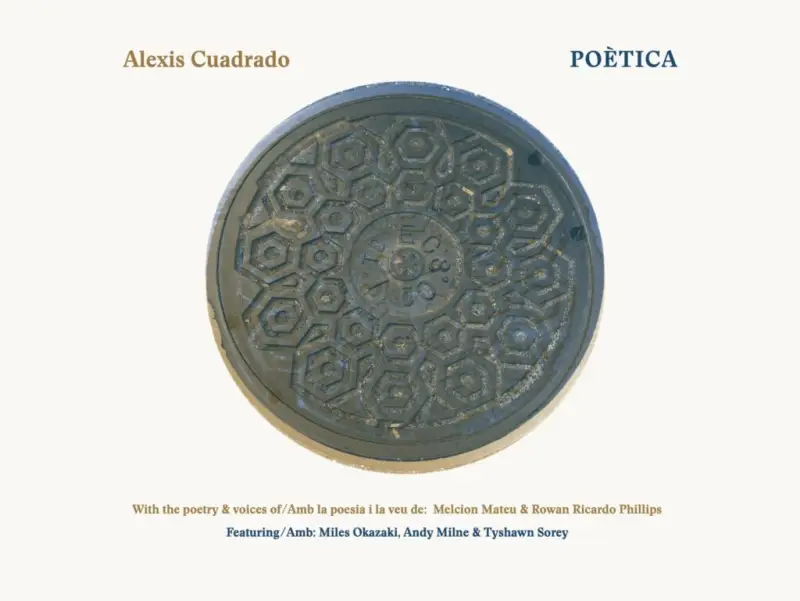
On Noneto Ibérico (2011), flamenco rhythms meet jazz harmony in writing for a nine-piece group. A Lorca Soundscape (2013) takes poems by Federico García Lorca about Depression-era New York as the starting point for a set of protest songs concerned with inequality in the present. Poètica (2016), a companion to the Lorca project, sets New York-themed poems by Melcion Mateu and Rowan Ricardo Phillips alongside Cuadrado’s music.
The two-volume Silent Film Scores project extends that interest in old material speaking to current concerns. Volume 1 pairs new scores with three short films: Alice Guy-Blaché’s The Consequences of Feminism (1906) and Algie the Miner (1912), and Harold M. Shaw’s The Land Beyond the Sunset (1912). Their stories touch on gender conventions, queer identity and the human effects of poverty.
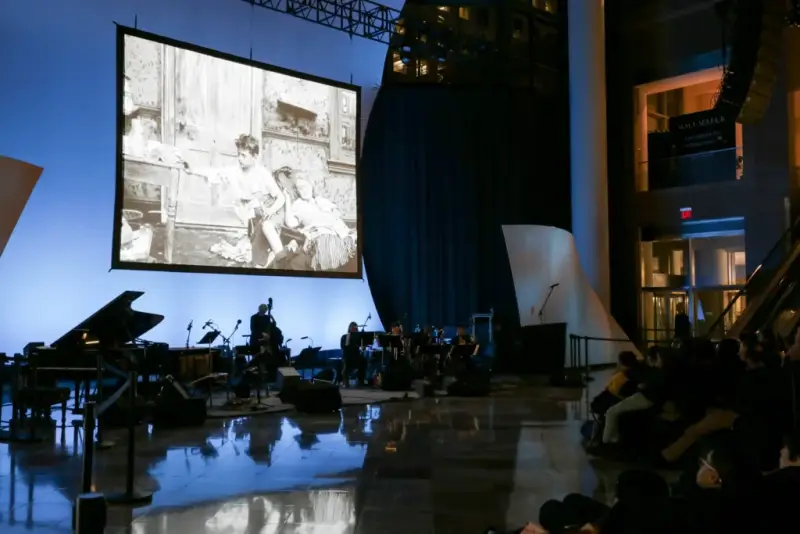
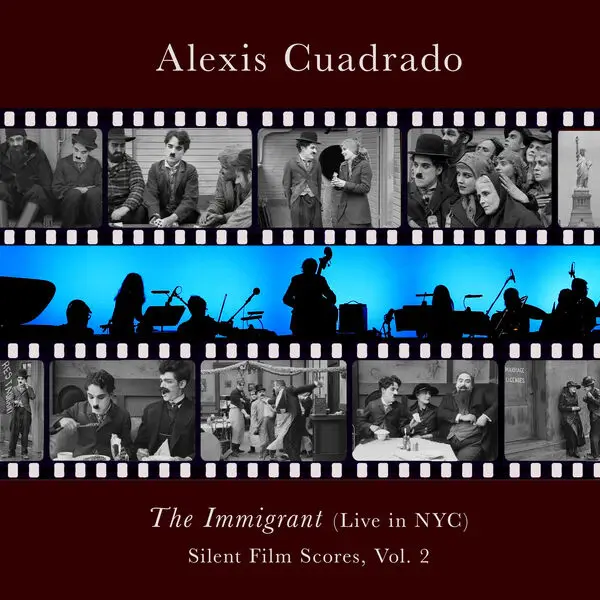
Volume 2 is The Immigrant (Live in NYC), a score for Charlie Chaplin’s 1917 two-reeler. Cuadrado wrote it for a ten-piece ensemble performing live with the film; the concert recording was made in January 2020. The score first premiered in 2015, and a video of that performance has attracted more than two million views. Its musical sources include early and modern jazz, new music and traditions from across national borders. Cuadrado connects Chaplin’s treatment of migrants to current hostility toward newcomers, saying that the film’s call for empathy remains urgent.
Putting the ensemble inside the mix
Cuadrado’s Atmos method starts with an aim that sounds simple but takes care to execute: use the whole space, while giving every placement a musical reason. He wants the listener in the middle of the band, with enough separation to follow individual parts and enough shared ambience to keep the group cohesive. Balance matters as much as movement. Surround channels and height speakers contribute detail and perspective rather than serving as decoration.
His typical layout places bass and drums across a broad front image. Their reverberation, overtones and physical sounds—plucks, bow contact, drum attacks and decays—can extend more quietly into other parts of the room. Brass and winds often occupy corresponding left and right positions, with higher and lower instruments arranged toward the front or rear. Solo horns can rise into the height channels. Piano, organ and vibes tend to sit in the side surrounds, with some movement toward the rear or wider positions. Guitar often takes a phantom position near the center, where signals from the center and front height channels combine.
These are starting points, not fixed rules. The arrangement and recording conditions determine the mix. That flexibility is especially clear on Puzzles. The album was made professionally in one untreated room, with the musicians playing together without headphones or monitors. That live setup gives the record an easy, open feel, but it also means the instruments bleed into one another.
Cuadrado uses careful panning and blending, along with restrained EQ and compression, to separate the quartet without scrubbing away its shared sound. The core saxophone, guitar, bass and drums can expand with trombone or electric organ while retaining definition. The drums remain notably punchy despite the spill between microphones. The program itself moves among sophisticated, catchy jazz, the Metheny-like rock of “Bright Light,” a relaxed Bill Withers tribute in “B&W Pop,” and the Crusaders-flavored “East 10th Street Shuffle.” The mix keeps that variety intact instead of imposing one atmosphere on the whole record.
Noneto Ibérico gives Cuadrado a larger ensemble to work with: a horn-heavy nonet featuring guitar, piano, drums and percussion, with a guest trio of flamenco handclappers. The expanded instrumentation creates more points of exchange across the soundfield. Bass and drums stay grounded at the front, with a parallel send extending into the rear and upper rear. A touch of kick in the low-frequency effects channel reinforces the bass on tracks built around layered meters, especially the sprawling “Por La Minima.”
Other choices respond to particular textures. On several tracks, brushed cajón in the center meets hand percussion out to the sides. “Very Well” begins with arco bass, cymbal washes and tom rolls that swell across the front, sides and ceiling, while muted brass and vocal-like birdcall sounds shimmer from behind. In “Te Sigo,” separate groups of handclaps occupy the front, middle and rear stereo pairs. The effect makes the exchanges between players easy to follow while supporting the album’s buoyant character.
Poetry and percussion across the room
A Lorca Soundscape brings voice and instrumental ensemble into close dialogue. Chilean vocalist Claudia Acuña performs with Cuadrado’s saxophone, piano, bass and drums quartet, which features Puerto Rican alto saxophonist Miguel Zenón. Brazilian percussionist Gilmar Gomes adds hand drums on several tracks. The music moves through swing, bebop, bolero and flamenco, as well as Afro-Latin, Bahian and Caribbean rhythms and newer musical forms.
The Atmos arrangement makes room for Acuña by moving pianist Dan Tepfer toward the rear and shifting Zenón from the front toward the rear left. Acuña’s voice remains prominent across the front and front heights. One of the clearest demonstrations comes in “Danza de la Muerte”: drums, tambourine, wood block, caixinha and claps pass rhythmic figures among the different parts of the soundfield. Piano and saxophone enter in stages, and the vocal refrain arrives only after the percussion has established its hypnotic 12/8 pattern.
On Poètica (10th Anniversary Edition), the poets take positions at the sides, giving their spoken performances the intimacy of nearby voices. Andy Milne’s piano leans toward the rear, while Miles Okazaki’s guitar sits above and just forward of the listening position. In “Grief and the Imaginary Grave,” a high-register bass solo with a long reverb trail spreads from the sides toward the front and overhead as it takes the place of Phillips’s spoken passage.
The approach can also turn a poem into a spatial performance. In the third stanza of “Balada de Matt Sweeney,” multiple recordings of Mateu’s voice join from above, building a chorus around the poem’s comic, self-satisfied character. Across the album, the writing shifts among noir-like moods, swinging and loping rhythms, musical references from Iberia and the Americas, and unexpected flashes of progressive rock and dark comedy.
Different rooms for different films
The scores for the three Volume 1 films give Cuadrado a range of ensemble sizes and recording textures. “Consequences of Feminism” is played by a close-miked chamber trio of violin, piano and bass. Reverb and room ambience spread around the listener, while the instruments remain distinct. In “Generosity and Liberty,” from The Immigrant, violinist Sara Caswell takes up a continuing “America” quotation within the tentet. Her line seems to emerge from inside the listener’s head before its position above becomes clear.
The Land Beyond the Sunset uses a sextet close to Cuadrado’s familiar layout, with flute or clarinet sometimes taking the alto saxophone role and bass clarinet standing in for tenor sax. Algie the Miner brings in an electro-acoustic quartet. Bass and drums hold their usual places, while vibes move to the left rear and guitar to the right rear, leaving room for guitar effects to travel through the space.
The live recording of The Immigrant presented a different challenge. The performance engineer’s careful miking and the multitracks available from the soundboard gave Cuadrado material to shape, even though substantial bleed ran through the recording. He says that bleed became part of the immersive ambience. Used strategically, it helps the ten players sound like a much larger group, while the mix remains controlled enough to preserve detail. Solo phrases step forward in cues such as “On the Boat / Dinner Time,” where different parts trade short bursts of activity around the listener.
The score’s twenty-five minutes draw on ragtime and hot jazz, Weimar-era music, Raymond Scott’s mechanical wit, film noir, Mingus, Ellington, Carla Bley and Charlie Haden, and Maria Schneider’s more spacious lyricism. The references serve the film’s comic and uneasy shifts in tone. In Atmos, those changes can register through both the writing and the changing positions of the instruments.
Six mixes, with more work ahead
The six remixes appeared individually in ImmersiveAudioAlbum’s online shop over eight months and are now available there as Dolby TrueHD MKV downloads. The first volume of Silent Film Scores is also available in Atmos TrueHD. Cuadrado has begun mixing immersive releases for other musicians in his circle, including guitarist Miles Okazaki’s 2023 album Miniature America and vocalist Sofia Rei’s 2026 album Antónima.
For listeners, the series offers a useful way to hear how one mixer adapts immersive placement to different ensembles and source recordings. The handclaps in Noneto Ibérico, the conversational vocal arrangement in Poètica and the live ensemble in The Immigrant call for distinct solutions. Cuadrado’s throughline is an arrangement-first approach: each channel carries information that belongs to the performance, and the space helps the listener follow how the parts connect.


