Robert Trujillo’s 10 Defining Bass Lines, from Suicidal Tendencies to Metallica
Ten tracks trace Trujillo’s range, from slap driven funk metal to the tightly locked riffs and low notes of Metallica.

Robert Trujillo’s career makes a strong case for the bass as both a groove instrument and a source of weight, motion and melodic shape. Across Suicidal Tendencies, Infectious Grooves, Ozzy Osbourne’s band, studio collaborations and Metallica, he has moved between styles without losing a physical, rhythm first approach. These ten bass parts show how that approach changes with the song: sharp slap and pop figures give way to spacious low string riffs, then to the tight doubling and drum interplay of Metallica.
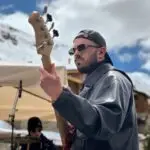
His musical range began at home in Santa Monica, California. Trujillo grew up hearing his father play flamenco and his mother put on Marvin Gaye and James Brown. Jaco Pastorius was the player who made the bass itself an obsession. Trujillo admired the way Pastorius joined jazz, rock, funk and soul to a punk attitude, a mix that helped shape his own broad view of the instrument. In 2014, Trujillo produced a documentary about his musical hero.
As a teenager, he played in local bands covering Black Sabbath, Rush and Led Zeppelin. At 19, he enrolled in jazz school with the aim of becoming a session musician. That grounding helps explain the flexibility heard in these selections: Trujillo can make a riff feel buoyant, abrasive or deeply anchored, and he can adjust his part to the needs of the band around him.
Suicidal Tendencies: crossover energy and precision
Trujillo joined Mike Muir’s Suicidal Tendencies in 1989, at a point when the Venice Beach band was a central name in crossover thrash. He played on four studio albums and remained with the group until 1995. Lights… Camera… Revolution!, released in 1990, marked an important moment for the band and put his bass playing into a forceful mix of metal, punk and funk.
“Send Me Your Money” (1990)
From Lights… Camera… Revolution!, “Send Me Your Money” makes its impact through a triplet based groove. Each beat divides into three equal parts, giving the line a swinging push that feels loose while remaining sharply controlled. The bass doesn’t merely reinforce the pulse; its rhythmic shape is a major part of the track’s character.
Trujillo uses slap, striking the strings with his thumb, alongside pop, in which a finger hooks and releases a string so it snaps against the frets. The combination gives the line its percussive edge. For players learning it, the useful challenge is to keep the triplet feel even while giving the slap and pop notes distinct accents. The full tab is available for “Send Me Your Money”.
“War Inside My Head” (1993 version)
There are two recordings to distinguish here. The original “War Inside My Head” appeared on Suicidal Tendencies’ 1987 album Join the Army, with Louiche Mayorga on bass. Trujillo plays on the 1993 re-recording, released on Still Cyco After All These Years. That album revisited material from the group’s 1983 debut and included two songs from Join the Army. The band recorded the updated performances with its 1989–90 lineup, giving the material a fresh performance and production treatment. The 1993 version also became familiar to many listeners through its music video.
The intro is a useful study in separation and coordination: an open D rings beneath changing notes on the G string. A right handed player can fret the D string part with the index finger and the G string notes with the middle finger. Short lead in notes and hammer ons give the phrase its forward motion. Each first note is picked, while the following note sounds through the fretting hand without another pluck. The result adds detail without crowding the underlying pulse.
Infectious Grooves: room for the funk
Formed in 1989 as a side project led by Muir and Trujillo, Infectious Grooves let members of Suicidal Tendencies pursue a more overtly funky sound, with eccentric humour and bass parts designed to move. The two tracks below show how the band gave Trujillo space to stretch his technique while keeping the grooves connected to a heavy ensemble.
“Punk It Up” (1991)
The opening track on Infectious Grooves’ debut, The Plague That Makes Your Booty Move… It’s the Infectious Grooves, “Punk It Up” announces the band’s priorities immediately. The bass groove is built around slap, but the demanding passage is a fast run of 32nd notes shaped with hammer ons and pull offs.
At that speed, clean articulation matters more than force. Practising the run slowly gives each note time to speak and makes it easier to keep the transitions even; speed can come after the phrase is controlled. It’s a compact example of Trujillo’s approach: a bright, percussive sound supported by careful left and right hand coordination.
“Violent & Funky” (1994)
“Violent & Funky” opens the band’s third album, Groove Family Cyco / Snapped Lika Mutha, with a part that makes its technical demands clear in stages. The opening popped notes, connected by hammer ons and pull offs, can initially sound like the whole task. The main groove then shifts into 16th note triplets, played with the ring, middle and index fingers of the right hand.
That three finger pattern needs a reliable, relaxed cycle. Start slowly enough to keep the notes equal in volume and timing, then build tempo in small steps. Guitar Pro’s Speed Trainer can be set to increase the playback speed between chosen starting and ending percentages, with the increment and repetitions specified by the player. For this line, gradual tempo changes help expose unevenness before it becomes harder to correct.
Ozzy Osbourne: a solid part in a guitar led riff
Trujillo first met Ozzy Osbourne while Infectious Grooves were recording their debut album in North Hollywood. Osbourne was working on No More Tears at the same studios, and the bands were signed to Epic Records. Infectious Grooves invited him to sing the choruses on “Therapy,” a collaboration that helped lead to the band opening for Osbourne on his Theatre of Madness tour.
In 1996, after the musicians had become friends, Trujillo was asked to audition for Osbourne’s band. He is credited on Osbourne’s 2001 album Down to Earth, and he re-recorded bass parts for the 2002 reissues of Blizzard of Ozz and Diary of a Madman. His live work with Osbourne is captured on Live at Budokan, released in 2002. Two decades later, he returned to the studio for Patient Number 9 (2022), playing on seven tracks alongside Duff McKagan, Chris Chaney and producer Andrew Watt.
The album’s bass credits show the different combinations: Trujillo plays on “Patient Number 9,” “Parasite,” “Degradation Rules” and “Dead and Gone.” He shares “Mr. Darkness,” “Evil Shuffle” and “God Only Knows” with Watt. McKagan plays “Immortal” and “One of Those Days”; Watt is credited on “No Escape from Now” and “A Thousand Shades”; Chaney plays “Nothing Feels Right.” “Darkside Blues” has no bassist credited.
“Gets Me Through” (2001)
“Gets Me Through” opens Down to Earth, Osbourne’s first studio album in ten years after No More Tears. In the video, Trujillo plays alongside guitarist Zakk Wylde and drummer Mike Bordin. The central riff is played in unison with Wylde, so note length and rhythmic articulation are essential: even small differences can blur the attack.
A later section adds double stops, with D and G sounded together. That two note figure broadens the bass part’s colour and gives it more harmonic weight. The arrangement is a reminder that a bass line can reinforce a guitar riff while still bringing its own texture. The complete tab for “Gets Me Through” is available online.
Jerry Cantrell: serving the composition
Trujillo and Jerry Cantrell crossed paths in the mid 1990s, when bills brought Suicidal Tendencies, Alice in Chains and Metallica together. Their first studio collaboration came in 2002 on Cantrell’s second solo album, Degradation Trip, released in June and dedicated to Alice in Chains singer Layne Staley, who had died two months earlier. Trujillo and Bordin formed the rhythm section, with Trujillo taking a supporting role in Cantrell’s song centred arrangements.
The expanded Degradation Trip Volumes 1 & 2 followed in late 2002, collecting 25 tracks. Trujillo and Cantrell did not record together again for 22 years, returning for Cantrell’s I Want Blood. Trujillo plays “Vilified,” “Off the Rails” and “It Comes.” McKagan plays “Afterglow,” “I Want Blood” and “Echoes of Laughter,” while Cantrell is credited on “Throw Me a Line,” “Let It Lie” and “Held Your Tongue.”
“Spiderbite” (2002)
The opening bass line of “Spiderbite” carries a weighty, low slung character that sits naturally beside Cantrell’s guitar writing. Trujillo plays it on a five string bass, using a quarter tone bend on F sharp to give the riff a slight pitch inflection. The bend is small, but it changes the feel of the sustained note and adds tension without turning the part into a flourish.
For players working through the phrase, the key is to keep the bend controlled and in proportion to the note around it. The line shows Trujillo using a subtle expressive move to deepen a heavy riff while leaving the song’s larger shape intact.
Black Label Society: space and low string weight
Trujillo and Wylde had already worked together in Osbourne’s band, and Wylde brought him in for two tracks on Black Label Society’s 1919 Eternal: “Demise of Sanity” and “Life, Birth, Blood, Doom.” Wylde played bass on the rest of the album. Trujillo also performed live with Black Label Society between 2002 and 2003, a transitional stretch before he joined Metallica.
“Life, Birth, Blood, Doom” (2002)
Much of this line sits on the B string of a five string bass, with generous gaps between notes. The space is part of the riff’s force: the player has to let the low notes land and decay instead of filling every opening. Hammer ons and slides connect the phrases, adding movement while preserving the part’s deliberate, heavy feel.
For a clean performance, focus on the length of each note and the silence that follows. Slides should connect the intended pitches without making the rhythm vague. That balance between sustain, movement and space is the core of the part.
Metallica: locking the bass into the whole arrangement
Trujillo joined Metallica after Jason Newsted’s departure, following Newsted’s 15 years in the group as the successor to Cliff Burton. The band’s difficult period around the making of St. Anger was documented in Some Kind of Monster, which followed the musicians over three years and showed them bringing in a therapist to help them communicate. The film also records Trujillo’s audition and selection, including the band offering him a one million dollar advance as a sign of its commitment.
His arrival led to three studio albums with the band, extensive touring and a performance on all seven continents in 2013. He also developed several signature bass models with German maker Warwick. The following tracks trace the range of his work in Metallica, from a song built around the bass and drums to a modern thrash arrangement that draws on the band’s early vocabulary.
“The Day That Never Comes” (2008)
Death Magnetic was Trujillo’s first Metallica studio album. Its ten tracks include “The Day That Never Comes,” a power ballad whose scale recalls “One,” “The Unforgiven” and “Fade to Black.” Released five years after St. Anger, the album marked a return to a more expansive set of arrangements.
The bass part works as connective tissue. Trujillo locks with Lars Ulrich’s drums, reinforcing the kick drum while helping the band maintain a firm rhythmic centre. At points, the bass and guitar double notes from James Hetfield’s vocal line, so the instrument also contributes to the song’s harmonic shape. The part is effective because it moves between these jobs without crowding the arrangement. A full tab for “The Day That Never Comes” is available online.
“Cyanide” (2008)
“Cyanide” begins with a bass and drum pairing that establishes the song’s momentum before the guitars enter. When bass and guitar later play the riff in unison, their combined attack builds a dense wall of sound. Trujillo’s five string bass lets him reach the low D on the B string, adding depth to the arrangement.
He is also credited as a songwriter on every track on Death Magnetic, alongside Hetfield, Ulrich and Kirk Hammett. That writing credit places his role beyond performance: the bass player was part of the group’s work in shaping the album’s material. The tab for “Cyanide” gives players a way to follow the complete part.
“Lux Æterna” (2023)
Fifteen years after Death Magnetic, “Lux Æterna” offered another view of Trujillo’s place in Metallica’s sound. The song appears on 72 Seasons, released in April 2023. Its bass part draws on the band’s 1980s thrash language: continuous 16th notes, tight unison with the guitar and close rhythmic interplay with the drums.
The speed makes evenness the first priority. Start below performance tempo and work upward only while the notes remain clean and the coordination stays tight. Guitar Pro’s Speed Trainer can help structure that practice by raising playback speed in increments. The complete tab for “Lux Æterna” is available online.
Ten parts, one adaptable approach
These ten tracks show a player shaped by varied musical roots and willing to meet each arrangement on its own terms. Trujillo’s slap work with Suicidal Tendencies and Infectious Grooves depends on crisp articulation and rhythmic control; his collaborations with Cantrell and Black Label Society make more of space, low register and restrained detail. In Metallica, the bass can anchor the drums, double a guitar figure or reinforce the song’s harmony.
For bassists, the practical thread is to listen for the job each part performs before copying its technique. Slow down the fast figures, keep note lengths deliberate, and pay attention to what the other instruments are doing. That combination of feel and function is what makes Trujillo’s lines useful studies across such different musical settings.


