Spotify Login Outage Disrupts Accounts in the US and UK Before Service Improves
Spotify login failures peaked across the US and UK on November 24, then eased after the company said service was looking better.
Spotify users in the US and UK reported widespread login trouble on November 24, with many unable to access their accounts or play downloaded music. Reports rose sharply in the early morning before Spotify said service was improving. The company didn’t explain what caused the disruption, leaving users with a timeline but no technical account of the failure.
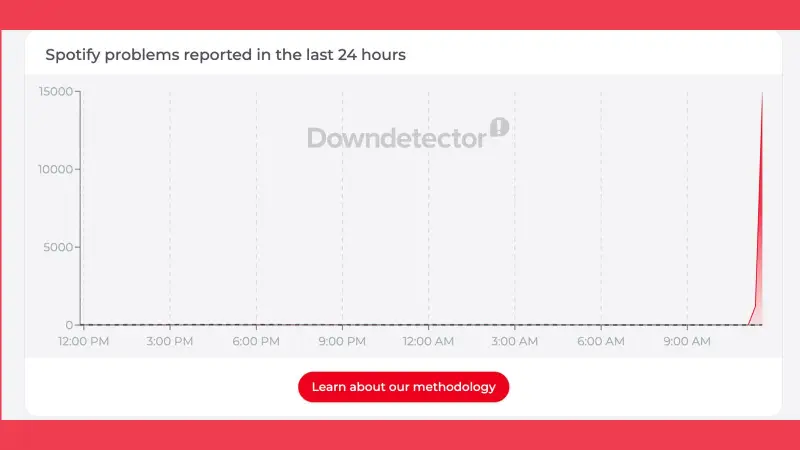
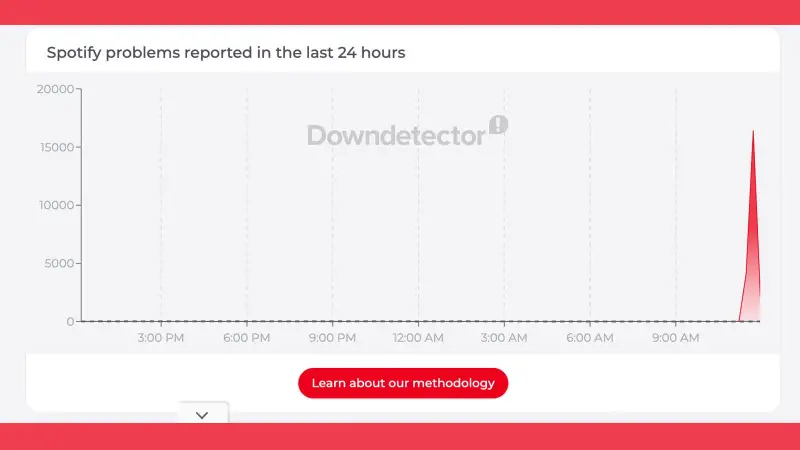
The first large rise in user reports appeared at about 6:15am ET / 11:15am GMT. Early totals reached more than 10,000 reports in the US and 4,500 in the UK on Downdetector. By around 6:58am ET, the reported counts had climbed above 16,500 in the US and 8,000 in the UK. Those figures reflect reports submitted to the service, not a verified count of affected Spotify accounts, but the rapid increase across two countries suggests the problem wasn’t confined to a handful of individual devices.
Account access was the main failure
Users described being signed out and then unable to return to their accounts. Some said the login flow prompted them to create a new account, even though they were trying to use their existing credentials. Others reported trouble playing music saved for offline listening. The reports make account access the most visible problem, though they don’t establish whether every affected feature had the same cause. An unexpected account creation prompt can also make a service outage look like an account-specific problem, complicating the first checks users make.
For anyone relying on downloaded albums or playlists during a commute, a sign-in failure can make offline listening difficult too. The reports show that some users encountered problems with both account access and playback; they don’t clarify whether the offline issue affected all devices or depended on a user’s existing app session. That distinction matters: downloaded audio may be stored locally, but access to an account can still affect how an app presents or verifies a user’s library. The available reports don’t establish which behavior applied here.
Spotify’s status account on X acknowledged the problem at about 7:00am ET, saying the company was aware of issues and was checking them. The message confirmed the company was investigating, but it didn’t identify a technical cause or provide details about a fix. That’s a limited update, though it gave users a company statement to compare with the reports they were seeing.
“We’re aware of some issues right now and are checking them out!” November 24, 2026
When a streaming app rejects a familiar password or presents an unexpected account setup screen, it can be hard to tell whether the trouble lies with the account, the app or the service. In this case, users reported similar login failures while Downdetector showed a sharp increase in complaints. That pattern was consistent with a broader service problem, but Spotify hadn’t explained the underlying issue. If you're working through an access problem like this, repeated password changes may add confusion before the service itself is stable.
Reports eased as sign-ins returned
By about 7:15am ET, some users were able to sign in again, and the reports on Downdetector appeared to be easing. That offered an early sign of recovery, though a falling report count can lag behind the return of service for individual users. A working login for one person didn’t establish that every account or feature was back at that moment. Recovery can arrive unevenly, especially when users are retrying at different times or encountering different parts of an app’s account flow.
At about 7:32am ET, Spotify posted that “everything’s looking much better now” and directed users who still needed help to its Support page. The update indicated that service had improved for most people, rather than confirming that every remaining problem had ended. Here's the thing: a general recovery notice is useful, but it can’t tell a listener whether a particular account, device or saved playlist is working again.
“Everything’s looking much better now. Thanks for your patience. If you still need help, get in touch at https://t.co/jmAt5MtcNJ” November 24, 2026
The episode appears to have been relatively brief: the sharp rise began around 6:15am ET, and Spotify reported improvement roughly an hour later. The available updates don’t say whether the failure involved authentication, account systems or another part of the service, so the cause remains unclear. That lack of detail limits what can be learned from the incident beyond its visible effects and recovery window. A short outage can still disrupt a routine built around downloaded listening, particularly when users can’t tell whether their account data or their connection is at fault.
What users can take from the outage
This is more significant than it looks: downloaded music is often treated as a dependable fallback when a connection is unreliable, but a login problem can weaken that fallback. The reports don’t show that Spotify’s offline library failed universally, and they don’t establish exactly how account access affected playback. Still, the overlap between sign-in complaints and reports about saved music is a reminder that offline availability depends on more than the presence of audio files on a device.
If a login still fails after service has improved, Spotify’s support page is the company’s recommended next step. For listeners, the practical check is whether the account accepts the usual sign-in details and whether saved music plays again. Service recovery was reported, but users still encountering errors may need to check their own access directly. And yet, the company’s brief updates leave the central question open: what failed, and whether similar symptoms could recur.


