ArgentPur Monobloc Review: GaN Class D Amplification at $5,900
ArgentPur’s GaN powered monoblocs pair 250W into 8Ω with refined, transparent playback, though their $5,900 price faces established competition.
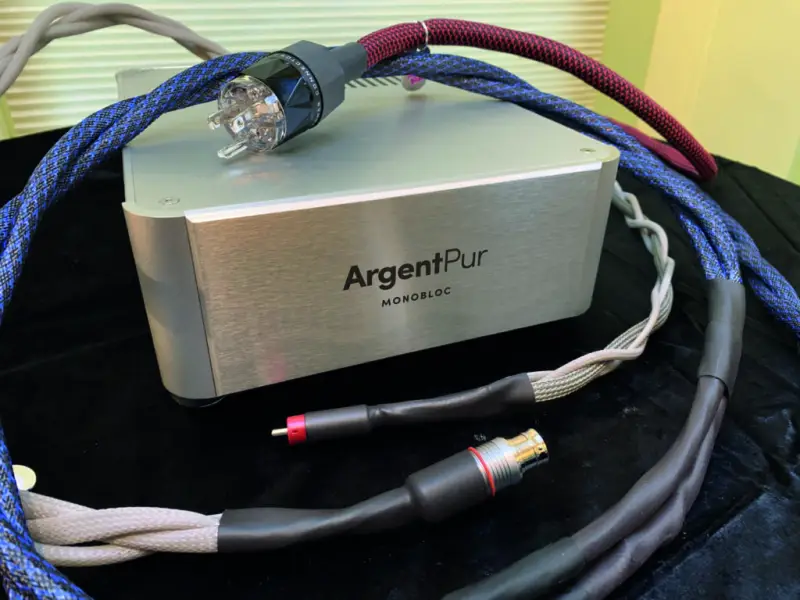
ArgentPur’s Monobloc amplifiers make a strong case for judging a design by what reaches the listening chair. Their GaN based Class D output stage, detailed bass and low apparent noise give them a clear sonic identity, while the $5,900 pair price puts them up against established high power amplifiers with longer warranties and wider name recognition.
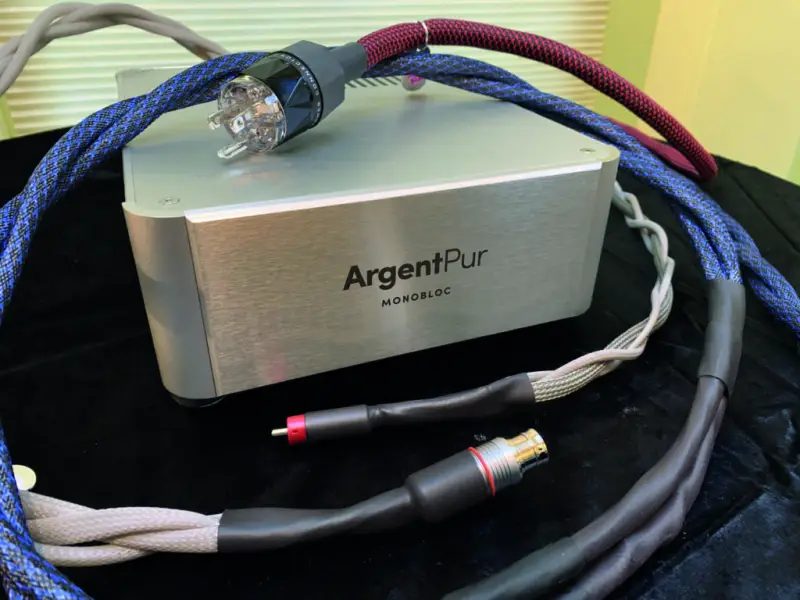
GaN switching in an audio amplifier
Gallium nitride field effect transistors, or GaN FETs, are drawing interest as gain devices for Class D amplifiers. Like other Class D designs, they can deliver high power with relatively little heat and in compact form. Their potential distinction is switching speed: GaN devices can change states faster than commonly used metallic oxide field effect transistors, or MOSFETs.
That speed matters when a designer puts it to work. Faster switching can move noise farther from the audio band, reducing the need for aggressive filtering that may affect the signal. The approach can also support accurate transient reproduction and lower distortion. GaN modules are not automatically better, though; the result depends on the way the designer implements them, and the technology remains less common in audio than conventional alternatives.
ArgentPur is the work of Ernest Meunier, a lifelong keyboard player who also took up cello and has spent years as an audiophile. He began with audio cables and has now moved into amplification. His company’s name reflects its cable designs, which use solid silver conductors arranged in multiple gauges. Meunier says their construction draws on ideas associated with the Cardas golden ratio, Kimber’s interference reducing weave and Siltech’s metallurgy.
Orchard modules, ArgentPur execution
The Monoblocs use Orchard Audio Starkrimson Ultra GaN FET amplifier modules. The modules are available for do it yourself builds at just over $1,000, operate at 800kHz and have bandwidth from zero to beyond 80kHz. Their gain is 19dB. Output is rated at 250W into 8 ohms and 500W into 4 ohms, with output into 2 ohms limited by protection to 250W. Idle power consumption is 11W.
The specified signal to noise ratio is 120dB, a figure that would once have seemed exceptional in audio. Here it reads as good, though not remarkable by current high end expectations. The technical specifications list a damping factor greater than 700 and distortion and noise below 0.08% in the worst case at 500W into 4 ohms.
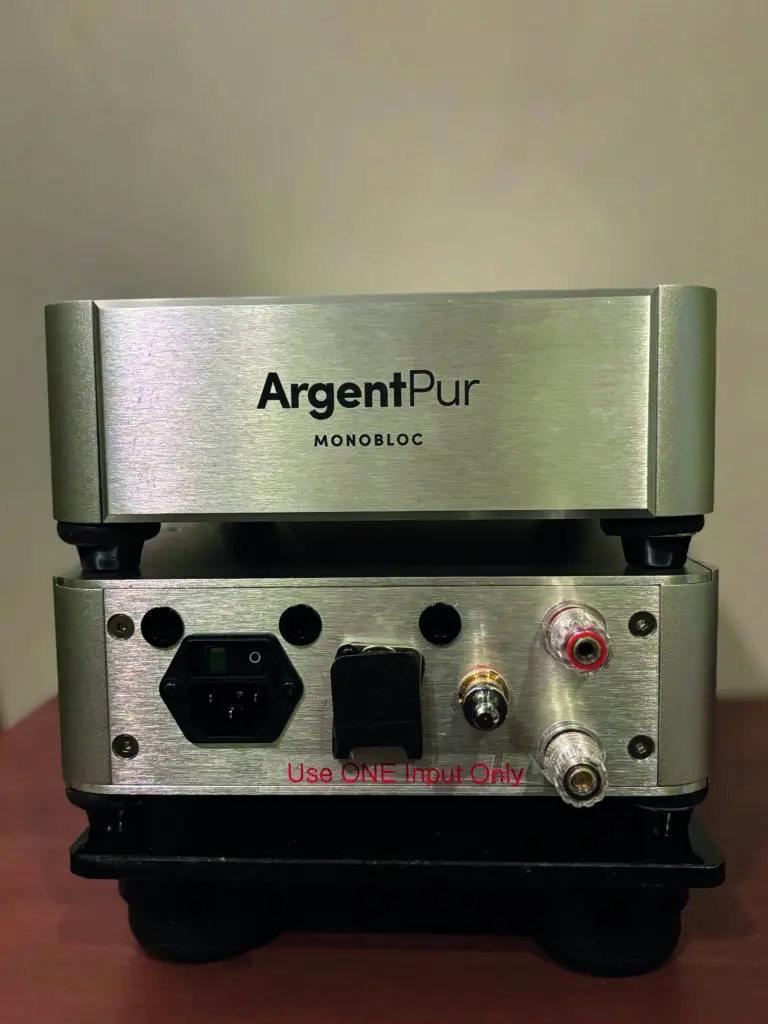
Meunier didn’t use Orchard’s 1,200W switching power supply. Instead, each amplifier uses a different 800W switching supply with a 72,000µF capacitor reservoir, nearly twice the capacity described for the Orchard unit. The electronics sit in a brushed aluminium chassis with solid corner quadrants and a thick front panel. The review samples had a substantial, cleanly finished appearance, though the panel joins weren’t as precisely fitted as CNC milling could allow.
Mundorf silver/gold foil in oil capacitors sit in the signal path. ArgentPur also uses its own silver conductors in fluorocarbon tubing for signal connections and power wiring. The amplifiers have a two year guarantee. Their US price is $5,900 per pair; overseas buyers need to account for import duty and sales tax. The reviewer estimated a UK total of about £7,500 including import charges and VAT.
Performance and competition
At this price, the ArgentPur pair has serious competition. The Bryston 4B³ stereo amplifier is one example: a Class A/B design rated at 500W into 4 ohms, with a 117dB signal to noise ratio and a 20 year guarantee. The Monoblocs therefore need to make their case through listening as much as through specifications.
In the reviewer’s system, they did. The Monoblocs delivered texture, dynamic nuance and a convincing sense of energy. Low frequencies felt controlled without losing scale: stand up bass had similar in room weight to the Bryston comparison, but came across with more tonal detail.
Meunier attributes an opening up of the highest octaves and a change in listening perspective to his choice of Mundorf capacitors. The reviewer didn’t make that claim the centre of the assessment. Lateral placement across the soundstage was competitive, while front to back depth fell short of the best amplifiers in the comparison. That impression may depend on the rest of the system.
The clearer strength was the presentation of transients alongside low levels of intermodulation distortion and high frequency hash. Intermodulation can be especially apparent on piano: extra noise around notes and their harmonics may make the sound seem richer, but can also turn brittle and unnatural. High frequency hash can form a halo around instruments that listeners sometimes mistake for recorded air or ambience. The reviewer heard less of both effects from the ArgentPur amplifiers. Piano had a more lifelike purity, while cymbal shimmer and recorded room echo came through with less unwanted accompaniment.
A neutral take on Class D
It’s difficult to separate the influence of the GaN modules from ArgentPur’s filtering, capacitors and wiring choices. The reviewer’s practical conclusion is that the complete amplifier matters more than assigning credit to one component. GaN FETs can be challenging to implement, but their presence alone doesn’t explain the result.
The ArgentPur Monoblocs sound neutral and transparent, with a natural sense of dynamic energy and less masking from unwanted noise. That character may suit listeners who regularly compare their systems with live acoustic music. Buyers who prefer familiar coloration may want a different presentation, and the price demands careful comparison with alternatives.
Each Monobloc is rated for 250W into 8Ω, 500W into 4Ω and 250W into 2Ω. Inputs have impedance of 44kΩ balanced and 22kΩ single ended; the power supply supports selectable 110V and 240V operation. For listeners considering GaN Class D, these amplifiers show how far the format has matured: the useful question is whether their particular balance of control, clarity and cost fits the system.


