Rane’s Turntablist Roots: From the TTM 54 to Magnetic Crossfaders
Rick Jeffs traces Rane’s path from a New York scratch mixer project to magnetic faders, digital platforms and AI tools for DJs.


Rane’s turntablist era began with a practical brief from DJs: build a mixer that could keep up with scratch performance. That collaboration led to the TTM 54, then the TTM 56 and its non-contact magnetic crossfader. For Rick Jeffs, Principal Design Engineer at Rane, the work also marked a broader shift: from analog hardware built around fixed circuits to digital systems where firmware and software shape how DJs perform.
Founded in 1981, Rane entered the DJ mixer market in 1986 with the MP 24, developed at the request of Richard Long, a sound designer for Studio 54 and other clubs. As the company marks 45 years in business, Jeffs recalls how a meeting with New York’s Steelworkerz crew helped connect Rane’s professional audio background with the needs of turntablists.
A mixer brief from the Steelworkerz
Rane already had DJ products, including the X3000 Isolator, X5000 Equalizer and MP 24. The Steelworkerz approached the company with a more focused challenge: create what they considered the ultimate scratch mixer. Rane engineers travelled to New York to hear their ideas firsthand.
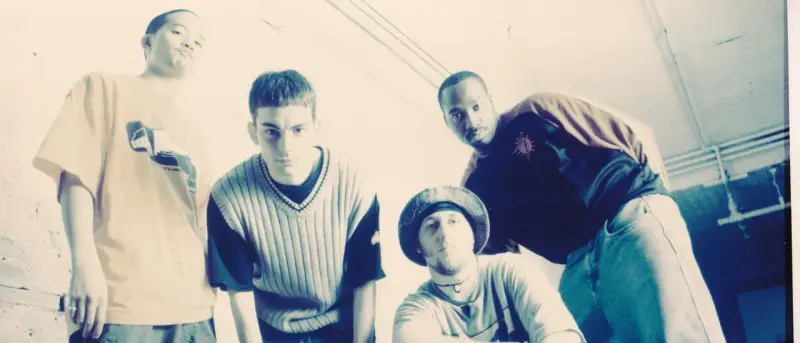
The first meeting took place at a Tableturns event in lower Manhattan, where local DJs competed and demonstrated their performance techniques. The Steelworkerz included Brian Lane, known as Big Wiz; Doug Coen, known as Sugarcuts; Marz1; and Peter Parker. Jeffs remembers arriving at a steel door in a dark alley. A bouncer initially told the visitors, “You don’t belong here.” Once they explained they had come at the crew’s invitation to discuss a mixer, they were let inside.
What followed gave Jeffs his first close look at scratch mixing as a performance discipline. DJs weren’t simply selecting and playing records; they were using turntables as instruments, combining timing, technique and showmanship. The next night, Rane met Steelworkerz members at an apartment in the South Bronx. They sketched out features and talked through what a battle mixer needed to do.
At the time, Jeffs says, turntablist culture was growing, while many available mixers lacked requested features or struggled with the wear of competition use. Rane’s response was the TTM 54, its first mixer designed specifically for turntablists. The project became a starting point for a line of products shaped around performance demands.
Why Rane went magnetic
The TTM 56 brought one of Rane’s defining design changes: what Jeffs describes as the DJ industry’s first non-contact magnetic crossfader. The approach came after considering resistive, inductive, optical and magnetic sensing. Jeffs chose magnetic sensing for its balance of performance and simplicity, and because it could avoid contamination problems associated with conventional faders without the added complexity of optical systems.
A traditional resistive fader can wear through repeated movement, become noisy or develop dead spots. Its response is also tied closely to its physical construction, which can make precise cut-in adjustment difficult. Even when a resistive fader serves only as a position sensor for a voltage-controlled amplifier, mechanical wear and variation remain.
Rane’s magnetic design senses fader position without an electrical contact in the signal path, then turns that position into a digital control signal. This lets the mixer calibrate the endpoints and set different taper curves, while maintaining consistent response over time. For scratch DJs, the result was more dependable cut-ins and fewer fader-related interruptions. Rane later refined its magnetic sensing for better linearity and resolution.
The distinction matters in practice: the fader’s position becomes an input to the mixer’s control system, rather than a resistive element whose electrical behavior directly shapes the audio. Digital control gives designers room to adjust response and offer options such as reversed operation, while removing a key source of contact wear.
From mixer to integrated platform
The TTM 56’s ideas carried forward into the TTM 57, which brought together a magnetic crossfader, dual internal USB audio interfaces, support for two computers, deep Serato integration and a control surface built around turntablist workflows. The product was no longer only an audio mixer; it combined hardware controls with computer connectivity and software functions.
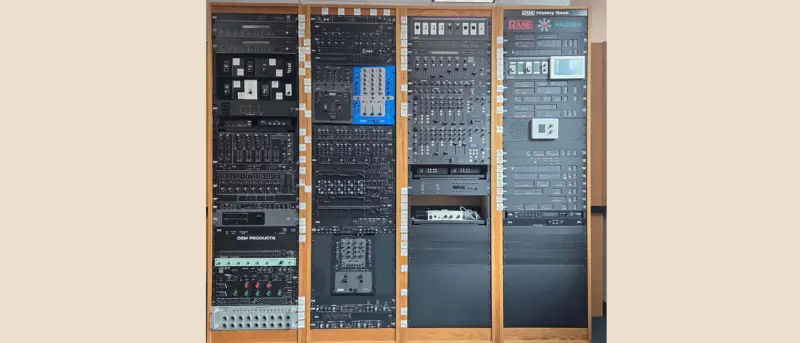
That progression—from the TTM 54 to the TTM 56 and then the TTM 57—also reflects a change in the engineering itself. Jeffs describes each generation as moving further from the conventional analog mixer and toward the integrated digital systems used in current DJ products. Rane’s acquisition by inMusic added software, firmware, industrial design and mechanical engineering resources that supported this development.
Dual USB connectivity became another influential feature. Two DJs can connect their laptops at once and hand over without stopping the music, a setup that suits back-to-back sets and changeovers. Similar support is now common across the DJ market. The magnetic crossfader followed a comparable path: a response to a specific performance problem that helped set expectations for later mixer designs.
What changed in the DJ workflow
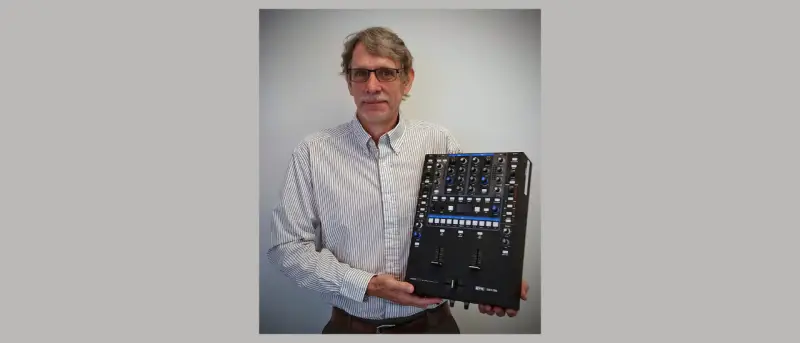
The MP 24 belongs to a very different technical period. It was an analog design built from components such as op-amps, resistors and capacitors. There was no firmware or computer software to maintain, and DJs needed physical records to play music. Today, mixers commonly convert incoming audio to digital for processing, then convert it back to analog at the outputs. Microcontrollers monitor controls, while digital signal processing makes more complex features practical.
Computer connectivity has changed the working setup as much as the mixer circuitry. Platforms such as Serato and Engine support large music libraries, effects, track management, looping, sampling and other performance tools. DJs can carry music on a laptop, external drive or media stick, and streaming services can expand access further. Jeffs recalls one DJ saying that transporting a record collection to a single event cost more than $5,000. A substantial vinyl setup once required hundreds of pounds of records; a digital library can fit in a backpack.
That convenience shifts the design priorities inside the booth. Instead of focusing chiefly on op-amps, VCAs and analog signal paths, manufacturers work with processors, audio converters, USB Type-C and other high-speed interfaces, embedded firmware and connected software. The objective remains familiar: help DJs communicate through music. The tools and the amount of music within reach have changed sharply.
AI as a tool for selection and organisation
Jeffs expects DJ hardware and software to keep gaining processing power and faster connections. He sees AI starting to appear in DJ products and applications, with potential uses in organising large libraries, surfacing relationships between tracks, building playlists and speeding up routine workflow tasks.
His view is that these tools can expand what DJs do without replacing the parts of performance that depend on judgment. Reading a room, choosing the right track and shaping a memorable set still call for taste, experience and creative decisions. Software can help with navigation and preparation; the DJ remains responsible for what happens in the booth.
Rane’s history makes that distinction tangible. The company’s move into turntablism began with a conversation about fader response and durability, then led through magnetic sensing, USB-connected mixers and integrated software. The next generation of tools will keep changing how DJs prepare and perform, while the craft still comes down to making the right musical choices in the moment. Find out more at Rane’s website.


