Sony LYTIA 720 Brings 4K 60p HDR and All-Pixel Autofocus to a 50MP Phone Sensor
The 1/1.56-type LYTIA 720 pairs 4K 60fps HDR with all-pixel autofocus; Sony also claims 50% less dark-scene noise than the LYTIA 700.
Sony’s LYTIA 720 puts its most useful video feature in a familiar smartphone sensor size: 4K recording at 60fps with HDR and all-pixel autofocus running together. The 50MP stacked CMOS sensor is a 1/1.56-type design, aimed at the main cameras of phones in the mid-range and upper mid-range. Sony says it also reduces dark-scene noise compared with its earlier LYTIA 700, though that comparison comes from the company rather than independent testing.
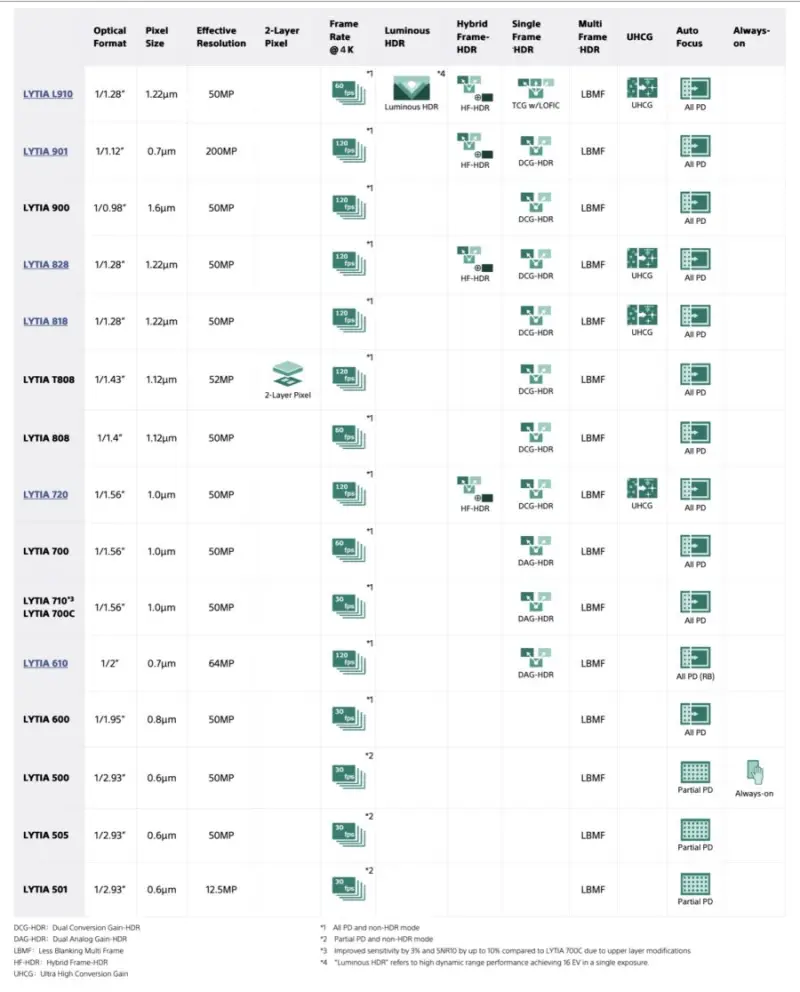
The practical appeal is the combination of readout speed, autofocus coverage and HDR. Phone makers often have to balance those features against each other, along with heat and power use. Sony says it shortened analog-to-digital conversion time and reduced sensor power consumption, giving device makers more room to offer faster video modes. The benefit to phone users will depend on how each manufacturer builds the camera system around the sensor.
What the sensor can record
The LYTIA 720 has approximately 50 effective megapixels, a 10.24mm diagonal and 1.0μm pixels beneath a Quad Bayer Coding color filter. Sony lists all-pixel autofocus across the sensor’s specified readout modes. At full 50MP resolution in 4:3, the maximum frame rate is 30fps. A 12.5MP 4:3 readout reaches 90fps, or 30fps with Dual Conversion Gain HDR (DCG-HDR).
For 16:9 video, the sensor can read out 4K2K at up to 120fps without HDR. Switch on DCG-HDR and the maximum listed rate is 60fps. That distinction matters: the headline 4K 120fps mode does not include HDR, while 4K 60fps does. Sony describes the LYTIA 720 as the first 1/1.56-type LYTIA sensor with 1.0μm pixels to support 4K 60fps HDR alongside all-pixel autofocus.
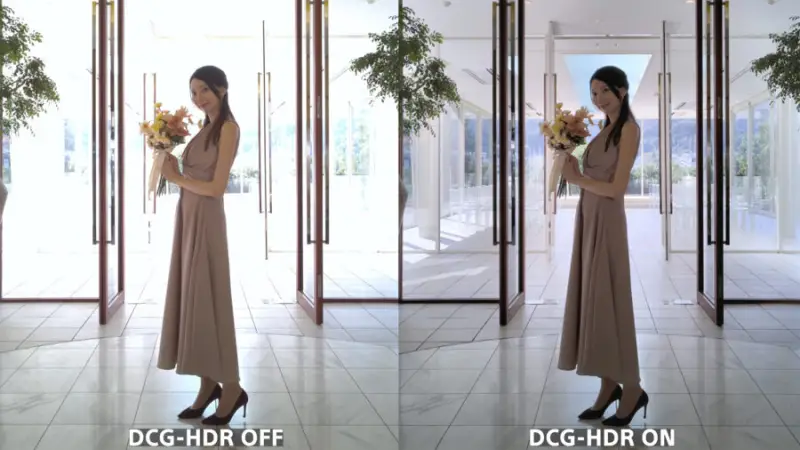
DCG-HDR captures the same exposure at two conversion gains. Because the sensor does not need to combine frames taken at different times for this mode, Sony says it can reduce motion artifacts while retaining enough exposure for low-noise images. In phone video, that approach is relevant when subjects or the camera move: merging frames captured at different moments can produce visible ghosting around motion.
Noise claims and the 100 dB figure
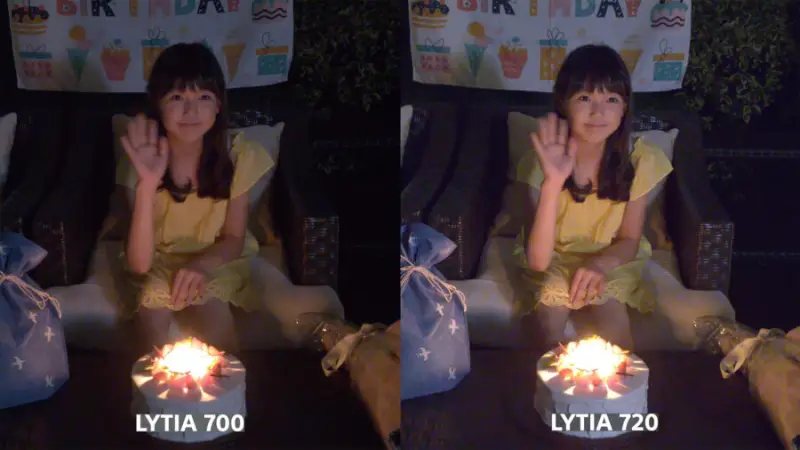
Sony’s new Ultra High Conversion Gain (UHCG) circuit is intended to improve charge-to-voltage conversion and suppress noise in dim scenes. The company claims approximately 50% less random noise than the LYTIA 700, its earlier 50MP sensor in the same 1/1.56-type format. Sony’s comparison image shows both sensors at 2 lux and describes the LYTIA 720 result as brighter at a similar noise level. That is a manufacturer comparison, not a third-party measurement.
Sony also cites a 100 dB dynamic range, equivalent to approximately 16.6 stops, using Hybrid Frame-HDR (HF-HDR). This method combines DCG-HDR information for low and medium brightness with a separate, shorter exposure to capture highlights. Since it merges information from two frames, HF-HDR differs from a single-exposure approach such as the LOFIC-based method used in Sony’s LYTIA L910.
There’s a specification detail to keep in view: Sony lists DCG-HDR for 4K 60fps, but does not state which frame rates support HF-HDR. The 100 dB figure describes the sensor’s HF-HDR capability; it does not establish that a phone using the sensor will record 4K 60fps at that range. Image processing, noise reduction, tone mapping and codec choices will also shape the finished video.
Phone integration and availability
The LYTIA 720 supports MIPI C-PHY using two or three trios, with a maximum of 4.5 Gsps per trio, or MIPI D-PHY using two or four lanes, at up to 2.5 Gbps per lane. Its stated supply voltages are 2.8V and 1.8V for analog, 1.1V for digital, and 1.8V or 1.2V for the interface. These are design details for phone makers, but Sony’s claim of lower conversion power could matter during extended video recording, when heat and battery draw can constrain performance.
Sony hasn’t named any phone makers or confirmed a device that will use the sensor. The company plans to begin mass-production shipments in early November 2026, so individual phone makers will determine when the first products appear. The LYTIA 720 joins a range that includes the 200MP LYTIA 901, designed for in-sensor zoom, and the 1/2-type LYTIA 610 used for a telephoto camera in the Vivo X500 Pro.
For phone buyers and video teams, the spec to watch is how manufacturers implement the 4K 60fps HDR mode: Sony provides the sensor capability, while the finished recording depends on the phone’s processing and thermal design. A mid-size sensor with fast readout may make HDR footage more practical, but real-world image quality will need to be judged on devices equipped with it.
More technical details are available on Sony’s LYTIA 720 page and the LYTIA product site.


