The Who By Numbers Gets Pete Townshend’s Dolby Atmos and 5.1 Mixes
Pete Townshend’s new spatial mixes open up The Who By Numbers, while the Super Deluxe Edition adds demos, session material and concert footage.
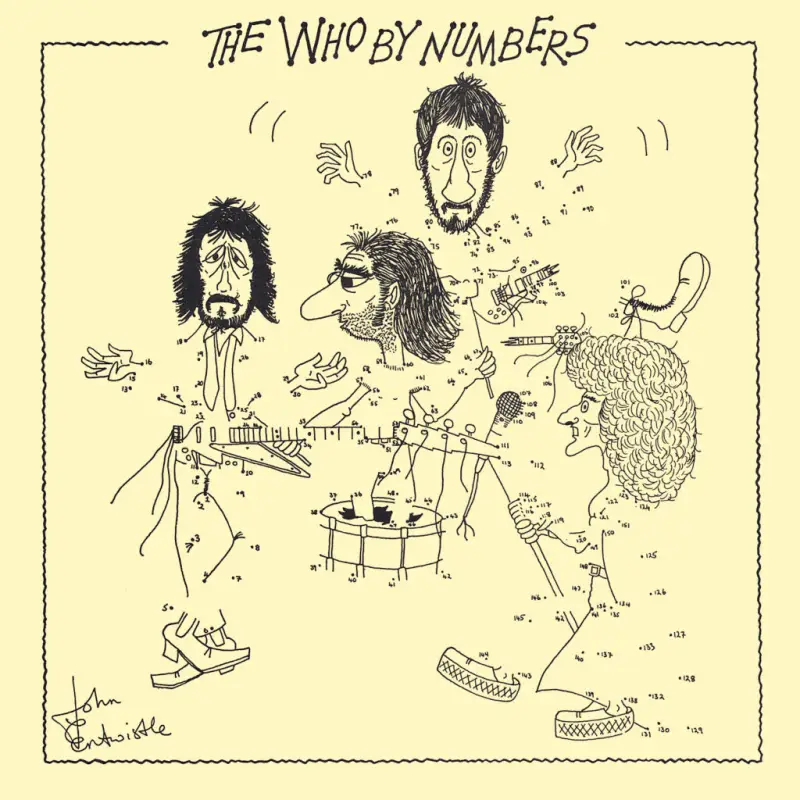
The Who By Numbers is an unusually personal record in The Who’s catalog, and its new Dolby Atmos and 5.1 mixes make that intimacy the point of entry. Pete Townshend created the mixes with engineers Mike Nyandoro and Tom Birkett, placing the album’s guitars, backing vocals, piano and percussion around the room while keeping Keith Moon’s drums and John Entwistle’s bass largely up front. The results are adventurous in their use of space, though the balance and tone can be uneven.

A studio album shaped by doubt
The album took shape in spring 1975, after The Who had finished touring Quadrophenia in June 1974. The band had spent much of the break working on Ken Russell’s film adaptation of Tommy, while Entwistle played solo dates. Townshend, who turned 30 that May, was wrestling with doubts about his age, the band’s relevance and the music business. Those concerns found their way into the songs.
The band recorded at Shepperton Studios between April and June, using Ronnie Lane’s Mobile Studio and reuniting with Who’s Next producer Glyn Johns. Townshend later described the sessions as sluggish. He was struggling with writer’s block and says the band recorded almost every song he had ready. Johns, in Townshend’s account, put in an exceptional amount of work; the musicians, meanwhile, played cricket between takes or went to the pub. Roger Daltrey has counted the album among his favorites, appreciating the way its songs lay bare the band’s vulnerabilities.
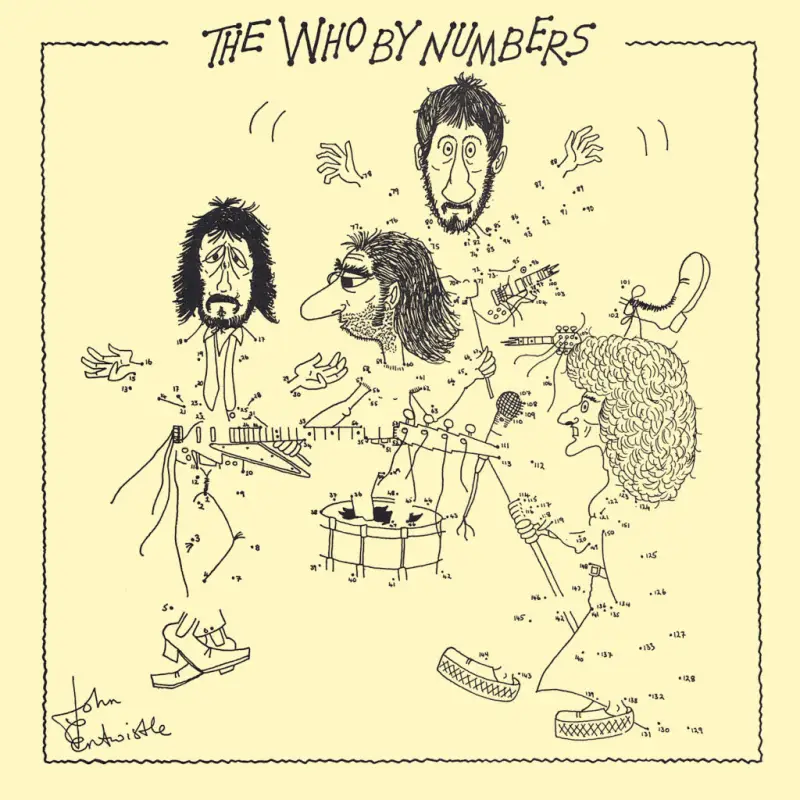
Released in October 1975, The Who By Numbers reached No. 7 in the UK and No. 8 on the Billboard chart. “Squeeze Box,” its breeziest track, became a top 20 hit on both sides of the Atlantic and reached No. 1 in Canada. Entwistle’s playful connect-the-dots cover art offers a striking visual counterpoint to the album’s darker writing.
Townshend takes charge of the new mixes
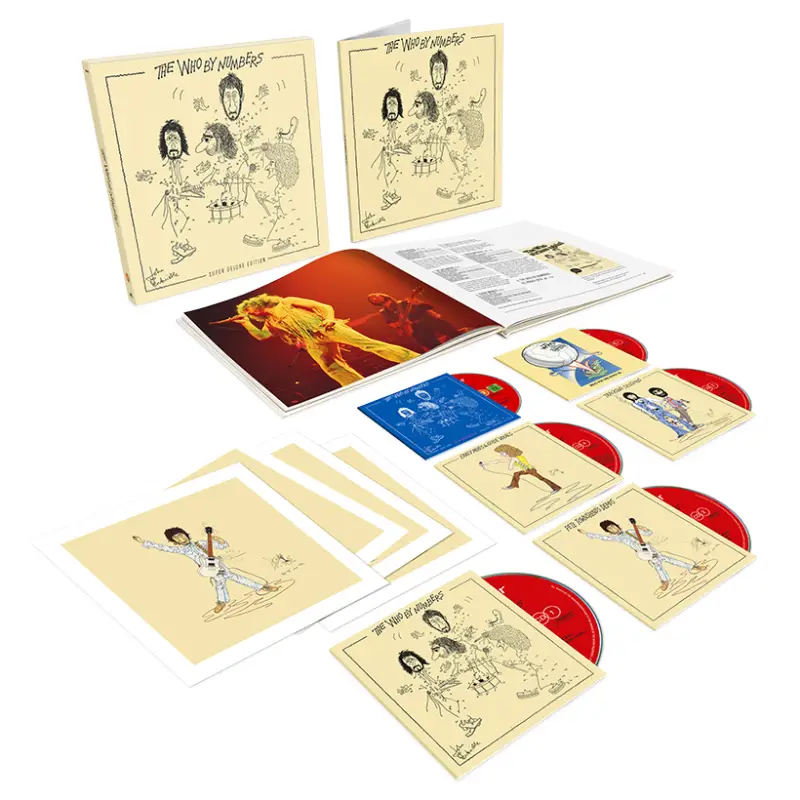
The album’s Super Deluxe Edition arrived on October 30 through Polydor/UMe as a 5CD/Blu-ray set. Its 100-page hardback book includes new notes by Townshend and Who historian Andy Neill. The audio archive adds 11 Townshend demos, tracking sessions from Ramport and Shepperton, early mixes and guide vocals. It also includes the most complete version yet of the band’s June 12, 1976 concert at Vetch Field in Swansea. Across the set are 92 previously unreleased tracks and mixes.
The Blu-ray presents new Dolby Atmos, 5.1 surround and stereo mixes of the original ten-song album. Townshend handled all three with Nyandoro and Birkett. That makes this a different approach from Steven Wilson’s Atmos work on Who’s Next and Who Are You, and the 2023 Quadrophenia Atmos mix overseen by Bob Pridden and Richard Whittaker. Townshend has experience with the format: he made a 5.1 mix of Tommy for its SACD and DVD-Audio editions in 2003.
Both the Atmos and 5.1 mixes are presented at 48 kHz/24-bit resolution. The same Blu-ray content was also sold as a region-free standalone SDE exclusive, but its preorder window closed in mid-September. Listeners without an Atmos setup still get the 5.1 mix in DTS-HD Master Audio and a new stereo mix. The 5.1 is satisfying in its own right: details placed around the room in Atmos, such as the “Slip Kid” backing vocals and “Squeeze Box” banjo, remain distinct in the rear channels.
Where the room opens up
The Atmos mix takes a fairly bold approach to placement. Moon’s drums and Entwistle’s bass generally anchor the front, while the side, rear and height channels carry acoustic guitars, piano, backing vocals, percussion and occasional lead guitar. Height effects are used selectively, so individual lines can catch the ear without making the whole mix feel suspended overhead.
On “Slip Kid,” most of the drums, percussion and Nicky Hopkins’ piano stay toward the front. Daltrey’s lead vocal forms a phantom center image, with only a little signal in the center speaker, while the backing vocals spread into the side and rear channels. “However Much I Booze” makes more dramatic use of the room: its opening acoustic guitars stretch across the front and sides, with strumming also reaching the height speakers. Lead electric guitar lines appear in the side surrounds.
“Squeeze Box” distributes its parts across several planes. Acoustic guitars sit in the front and front height speakers, an electric guitar is isolated in the rear left, and the backing vocals occupy the sides and heights. Percussion runs along the rear, while Townshend’s banjo solo spans the side and rear surrounds. On “Dreaming From The Waist,” Entwistle’s bass stays prominent at the front, with acoustic guitars mostly to the sides and the lead guitar mainly at front right. The drums also spill slightly into the sides.
One of the mix’s most arresting placements comes at the start of “Imagine A Man,” where the acoustic guitar plays from the front height speakers alone. The arrangement creates a clear image above the front stage; the backing vocals on the refrain come mainly from the side surrounds. The cymbals, however, can sound harsh.
Strong moments, with some rough edges
Entwistle’s “Success Story” separates its guitar parts between the front and rear speakers, with another electric guitar in the front right height channel. Piano sits mostly in the rear heights, though it could stand to be louder. The lead singers remain upfront as a phantom center image, while doubled vocals move to the sides. Low spoken interjections from the height speakers add an unexpected touch.
On “They Are All In Love,” acoustic guitars and piano move to the rear, leaving drums and bass to hold the front. The lead vocal seems to cross the front and sides, with more of its image in the side speakers. Additional acoustic guitar parts occupy the front and rear heights. The drums feel somewhat buried here, a concern that carries over to other points on the disc.
“Blue, Red and Grey” is a particularly good fit for the mix’s spacious presentation. Townshend’s ukulele opens across the front and side speakers, his vocal stays upfront, and Entwistle’s brass parts emerge from the sides and heights. The sparse arrangement gives each sound room, and Townshend’s voice comes through with welcome clarity. “How Many Friends” places piano across the side surrounds and rear heights, with an acoustic guitar floating overhead after the chorus. The closing “In A Hand Or A Face” divides its electric guitar parts between the front and rear.
The spatial choices don’t always come with the same care in tone. “Squeeze Box” can leave Moon’s drums recessed and short on weight; “Imagine A Man” has the sharper cymbal sound. At times the piano and acoustic guitars feel dull beside the more vivid presentation heard on the Who’s Next Atmos mixes. The best passages still make a strong case for hearing this material in a room based format, especially the overhead opening of “Imagine A Man,” the guitar movement in “Slip Kid” and the intimate clarity of “Blue, Red and Grey.”
Archival footage rounds out the set
The Blu-ray also includes 103 minutes of previously unreleased concert footage from Metropolitan Stadium in Pontiac, Michigan, recorded December 6, 1975. Nearly 77,000 fans attended, setting a record at the time for the largest indoor rock concert. Portions had appeared in The Kids Are Alright; the full performance has now been restored from the band’s archives with remastered audio. It offers a rare complete visual document of this tour, The Who’s last with Moon.
For listeners, the Atmos mix is a curious and often rewarding way into an album whose songs already reveal plenty. It doesn’t land consistently, but its best placements clarify how the arrangements can fill a room without losing their closeness. The Super Deluxe Edition’s demos, session recordings and concert film add substantial context for anyone drawn to this less celebrated but revealing stretch of The Who’s work.


