Steven Wilson’s Requiem For A Village Builds a Folk-Horror World in Dolby Atmos
Steven Wilson trades cosmic scale for an unsettling English village, with an Atmos mix that places narration, instruments and environmental detail around the room.
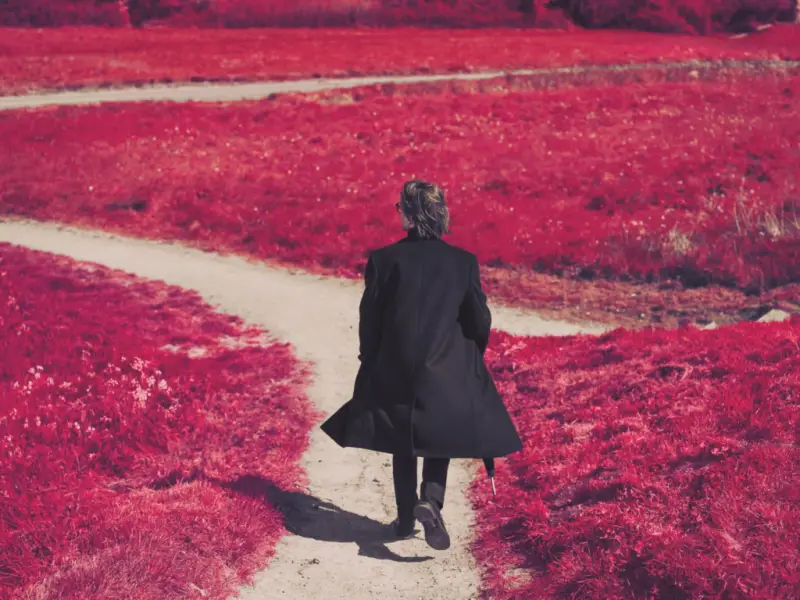
Steven Wilson’s Requiem For A Village turns spatial audio into part of the storytelling. Where his previous solo album, The Overview, followed a cosmic journey across two long tracks, this nearly hour-long work narrows its focus to a remote English village and the folklore surrounding it. The change in scale is also a change in sound: Wilson leans into imperfect performances, dissonance and detail placed around the listening room.
The album is due November 6 through Fiction Records and Virgin/UMe. Its setting is a hamlet seemingly removed from modern life, introduced through narration and populated by unnerving residents. The accompanying fictional parish council website is packed with lyrical references and clues, extending the record’s story beyond the music itself.
A village built from folklore and imperfect sounds
Wilson has cited the painter Stanley Spencer, ghost-story writers M.R. James and Algernon Blackwood, and the 1970s children’s serial Children of the Stones among the record’s touchstones. He has also pointed to Boards of Canada and Demdike Stare’s hazy electronics, the psychedelic folk of Third Ear Band, and the eerie character of British children’s television from the 1970s. The result draws on folk horror without settling into a single genre.
Wilson described the record as the inverse of The Overview: a more insular concept with a more angular, experimental sound. That shift comes through in the playing and production. He has largely avoided the corrective tools and precise finish associated with his recent albums, instead bringing together analog synthesizers and acoustic instruments that can wander slightly out of tune. Among the instruments he took up despite limited experience are violin, oboe and drums.
That looseness gives the music a restless edge. Spoken-word passages, heavy instrumental sections and dissonant textures take precedence over the more direct songwriting heard on To The Bone (2017) and The Future Bites (2021). Its darker material also connects with earlier Wilson work, including “Blackest Eyes” from Porcupine Tree’s In Absentia (2002) and “Raider II” from Grace For Drowning (2011).
Multi-instrumentalist Randy McStine and drummer Russell Holzman are among the returning collaborators. Andy Partridge of XTC, who contributed lyrics to The Overview, wrote the narration. David Tennant voices it, serving as a guide to the village and its inhabitants. The spoken passages give the album a through-line as it moves between songs and instrumental scenes.
Atmos places the listener inside the story
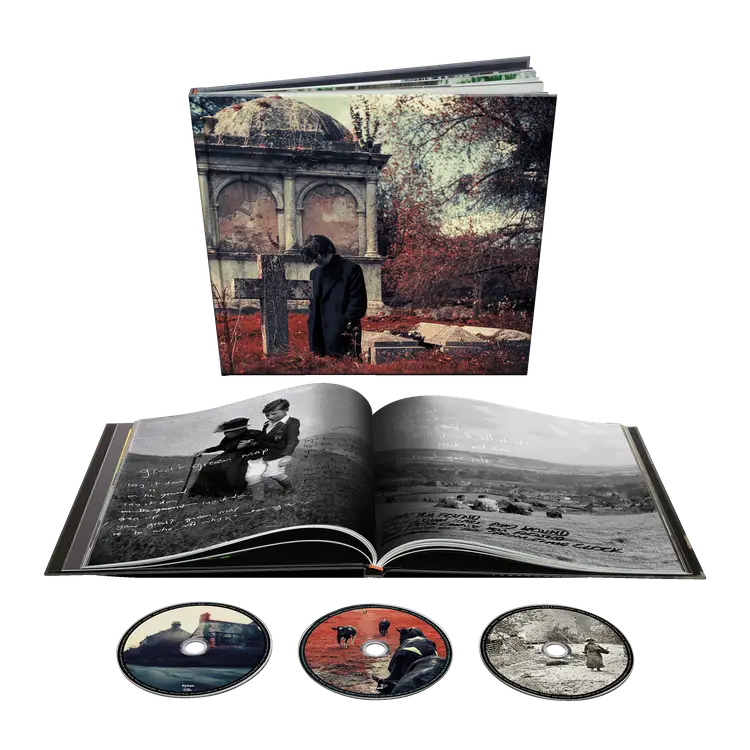
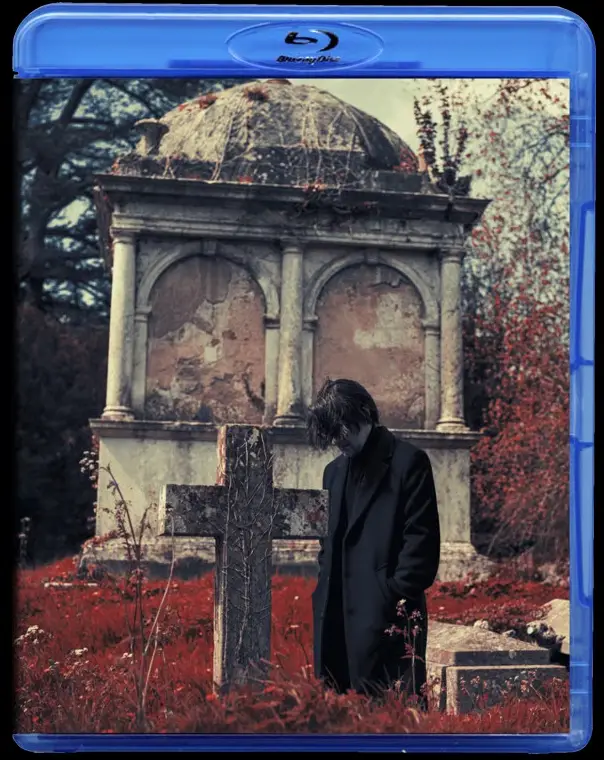
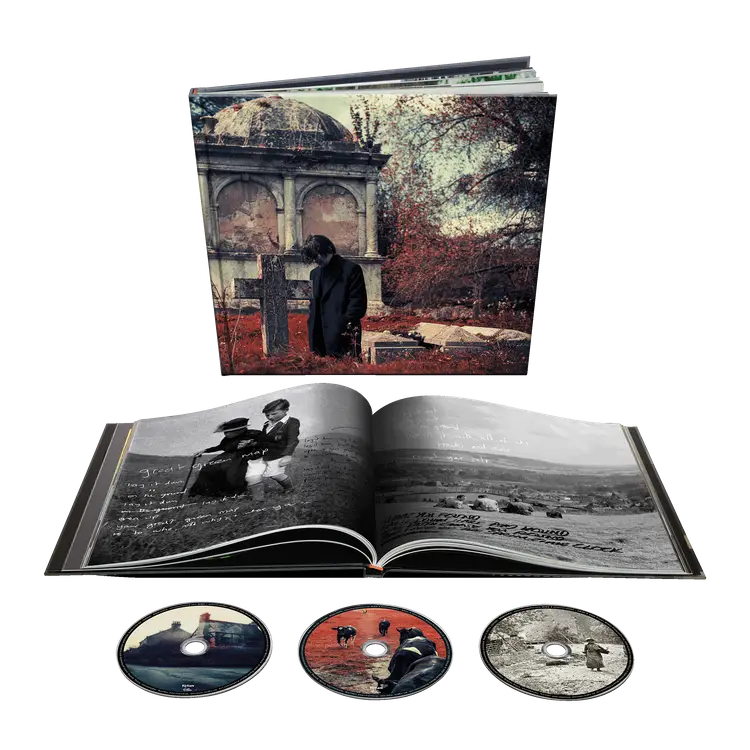
The album is available on CD, LP and a standalone Blu-ray with hi-res Dolby Atmos, 5.1 surround and stereo mixes. A limited three-disc deluxe edition adds around 47 minutes of music left off the album, including an extended version of the title track and an alternate take of “On Chapel Slope” sung by Katherine Priddy.
On a 7.1.4 system, the Atmos mix makes the room feel like part of the village. Running water and wildlife emerge from the side and rear speakers; bells and percussion appear overhead; and some sounds seem to hover beyond a clear point of focus. Wilson has said that he approached the mix with particular placements in mind for small sonic details. The result rewards a full-room system, though the placement choices also give each speaker a clear role in the narrative.
“Swirl In A Lark’s Eye” establishes the approach from the first moments. Chimes ring mainly overhead as a low synthesizer circles the seven ground-level speakers. Shakers and tribal drums travel from the rear toward the front, while darker bell sounds turn above the listener. A children’s choir enters from the right surround and slowly moves around the room. It’s an immediate demonstration of how movement and height can set a scene before the album’s characters are fully introduced.
Tennant’s narration is kept to the overhead speakers in Atmos, giving it a detached, all-knowing character. Wilson’s lead vocal generally sits in the center channel, while harmonies often spread into the rear and height speakers. That separation makes the narrator feel apart from the musicians and gives the vocal arrangements room to shift around him.
The title track, also the lead single, moves into heavier territory. A falsetto and cavernous reverb open the piece, then bass and analog synthesizers build at ground level as distorted guitars strike from both the front and rear. Wilson’s lead vocal arrives around 3:20, with McStine’s harmonies surrounding the listener from the sides and rear. Piano and keyboards occupy different parts of the room, leading to a guitar solo around the six-minute mark that sounds less like a conventional lead break than a creature breaking loose.
“The Same River Twice” eases the pressure. A watery piano, apparently treated through a Leslie speaker, anchors the front stage. Wilson’s dry center-channel vocal is accompanied by a delay that rises into the front height speakers. A layered synthesizer passage at 1:45 gives the track its defining moment, with a patient, spacious feel that recalls the opening “Bridge” from Marillion’s Brave and parts of The Harmony Codex.
Details shift from track to track
At more than seven minutes, “Now Departing” is the album’s most cinematic passage. After Tennant’s narration, Wilson whispers introductions to several villagers, including a woman living under witness protection, a “sonic explorer” and twins who share an attic. Holzman’s toms rumble from the rear into an extended instrumental section. Piano takes the front, a trumpet-like sound appears in the right surround and dissonant strings turn overhead. McStine’s harmonies arrive from behind, while the bass shifts rearward. A low, altered voice announces the title from above.
The brief instrumental “Hiraeth” takes its name from a Welsh word for a deep longing for a home that can’t be revisited. Piano leads from the front, nature sounds fill the sides and rear, and a delicate guitar solo sits in the center. A distorted bass synthesizer then enters from the front and circles through the room.
“On Chapel Slope” builds tension around a repeating guitar figure. McStine’s lead guitar is isolated in the front left, with percussion extending into the front height channels. An out-of-tune acoustic line joins from the front right, while strings drift overhead and synthesizers sit behind the listener. The climax layers chanting voices around and above the room. It’s one of the clearest examples of the mix using speaker placement to heighten the song’s unsettling character.
On “Murmuration,” the arrangement echoes the motion of the starling flocks named in its title. A bass synthesizer stays mostly up front as a second, helicopter-like sound circles overhead. Acoustic guitars occupy the front, with a banjo-like part in the left surround; Tennant’s narration then returns from above. Wilson’s vocal sits in the center, while the chorus spreads around the listener and another set of harmonies rises overhead. Near the end, Priddy sings a passage from Pentangle’s “Cruel Sister” from above as a synthesizer circles at ear level.
The short, pastoral “Cursus Fingerprint” takes its title from a type of Neolithic monument found in Britain: long, parallel earthworks. Acoustic guitars play up front, a mellotron fills the overhead speakers and flute sits in the rear. Wordless vocals stretch across the front, with percussion in the front and height channels. The melody from the beginning of the title track returns before distorted guitars strike from both front and back.
“A Basket Of Bees” opens with acoustic guitars and Wilson’s voice in the center. Clicking percussion moves through the height speakers, while harmonies and additional guitars come from behind. When the full band enters at 2:11, drums and bass spread across the seven ground-level speakers. McStine’s brief melodic solo seems to hang between the center, side and front height positions. Later, the lead guitar moves to the right surround as a synthesizer circles and a bell-like sound alternates behind the listener.
Tennant guides “Great Green Map” along streams and tracks, warning that those who enter the village won’t leave. A Leslie-treated piano surrounds the listener at ear level, and electric guitar rises into the front heights. Wilson’s telephone-filtered vocal later insists that boarding a train won’t provide an escape, recalling “Now Departing”; percussion bounces between the side surrounds.
“Wheel” restores the album’s weight with a chugging front-left riff, acoustic power chords from the sides and distorted guitar up front. Large drums fill the room at ear level, joined by pitched-down backing vocals. McStine’s extended solo stays in the center while synthesizer swells and percussion move around and overhead.
The two-minute closer, “The Old God Is Buried,” brings back sounds from earlier in the sequence. Tennant speaks from above as the tribal percussion of “Swirl In A Lark’s Eye” and the chanting from “On Chapel Slope” return. It closes the album by recalling its own sonic landmarks.
A dedicated 5.1 mix keeps the album accessible
Listeners without an Atmos system can use the Blu-ray’s 96-kHz/24-bit DTS-HD 5.1 mix. Wilson has continued to prepare dedicated six-channel surround mixes for his albums rather than simply re-rendering the Atmos version. The 5.1 presentation is less mobile: some percussion that travels through the height speakers in Atmos stays fixed in the rear channels, and elements placed in the Atmos side speakers may sit between the front and rear speakers as phantom images. Even so, the mix remains an engaging way to hear the album’s careful distribution of instruments and voices.
Requiem For A Village works best as a continuous listen, with spatial playback bringing its village, narration and shifting sound field into sharper focus. The Atmos mix makes an unusual concept tangible through arrangement and speaker placement; the 5.1 version preserves a strong sense of space for listeners without height channels. Set aside the time to hear it from beginning to end, and pay attention to how the room’s sound changes as each resident appears.