Teenage Engineering EP/BC–1 CD Player Combines Disc Playback, Cue Markers and WAV Ripping
The $329 EP/BC–1 pairs an exposed spinning disc with speed control, cue markers, Bluetooth, Auracast and USB CD ripping.
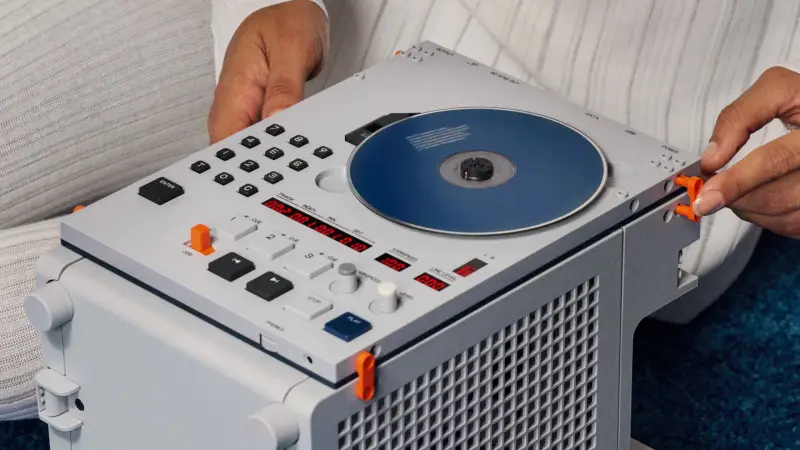
The Teenage Engineering EP/BC–1 puts hands-on controls and a visible spinning CD at the center of a wireless player. Its unusual design gets attention, but the more useful question for studio and home listeners is what those controls let them do: adjust playback speed, set cue markers, send audio to other devices and rip discs to WAV over USB.
Teenage Engineering lists the EP/BC–1 at $329 / £259, or about AU$500. The company’s Australian website lists it at $299 USD. That places it between inexpensive portable CD players and traditional home hi-fi components, though its open design and conspicuous controls make it a different kind of purchase from either.
A CD player you can operate by feel
The disc remains exposed as it spins, rather than sitting behind a lid or inside a conventional player chassis. That gives the device a visible mechanical element, while also making the EP/BC–1 feel more like a desktop object than a player designed to disappear into a bag. Teenage Engineering’s images show people carrying it around the house, but the design and controls suggest a device that’s just as likely to stay within reach on a desk or shelf.
Its display uses a retro-styled layout for track and time information. Buttons, dials and a number pad give the front panel a tactile, equipment-like character. Here, the controls aren’t merely visual decoration: one dial varies playback speed, and dedicated buttons let users place cue markers.
Those functions give the player some potential beyond ordinary album playback. Speed control can be useful when listening closely to a passage or changing the pace of a track; cue markers provide a way to return to selected points without searching through the disc each time. The available details don’t specify the speed range or how many markers can be stored, so those capabilities are best understood as added hands-on controls rather than a replacement for a dedicated sampling or playback setup.
Outputs and disc ripping
The EP/BC–1 can send audio over Bluetooth or Auracast, and it also has USB 2.0 output. For wired listening, it includes a headphone jack and stereo out. That range gives owners several ways to fit the player into a listening setup: headphones for private playback, a stereo connection to other audio equipment, or wireless playback with compatible devices.
USB does double duty. In addition to carrying output, the port can rip CDs into WAV files. That makes the player useful for listeners who want to bring a disc into a computer-based audio library, as well as those who prefer to play CDs directly. The listed details don’t specify ripping software, file-resolution options or whether metadata is handled automatically, so those practical details will matter to anyone planning to digitize a collection.
Teenage Engineering says the unit was designed to clip onto its K.O.-AMP 35 speakers. That creates a compact branded listening arrangement, while the headphone and stereo connections leave room to use other gear. The source details don’t list further compatibility requirements for the speaker attachment, so buyers considering that pairing should check the connection and mounting details before building a setup around it.
Portable in use, but not a pocket player
The EP/BC–1 is wireless and rechargeable over USB, but no battery-life figure is provided. That omission makes it hard to judge how well it suits longer listening sessions away from a power source. For home use, USB recharging is straightforward; for carrying it around, battery endurance and the exposed-disc design are practical considerations alongside its size and weight, which haven’t been stated here.
The $329 / £259 price also puts the player in a space where buyers may weigh its distinctive controls and disc-ripping function against a simpler portable CD player or a more conventional home component. The EP/BC–1’s case is strongest for someone who wants physical media to be part of the listening experience, likes direct access to speed and cue controls, or wants CD playback and WAV ripping in one device.
Its look may recall 1980s equipment, but the combination of wireless playback, Auracast, USB output and WAV ripping gives it a current role in a mixed listening setup. The clearest decision points are practical: whether the exposed disc and hands-on controls suit your space, whether your speakers or headphones connect as needed, and whether the unspecified battery life meets your expectations for portable use.


