United Adds Spotify Account Access to Seat-Back Screens on Starlink Flights
United passengers on some Starlink-equipped flights can sign in to Spotify on seat-back screens, with wider fleet support planned for 2027.
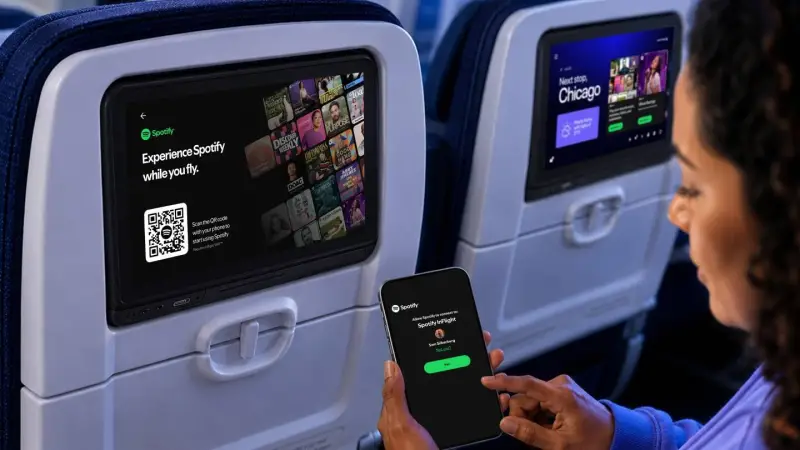
United passengers on some Starlink-equipped flights can now access their own Spotify accounts through the seat-back entertainment system. The change gives travelers a way to choose familiar playlists and podcasts without relying on downloaded files or paying for in-flight Wi-Fi access.
Availability is limited at launch: the feature works on flights with Starlink connectivity. United plans to extend support to more of its fleet in 2027, though the rollout details and the number of additional aircraft haven’t been specified. For now, whether a passenger can use Spotify depends on the aircraft and its onboard system.
Your account, on the seat-back screen
To start listening, connect to the flight’s United Wi-Fi network, open Spotify on the seat-back display and scan the screen’s QR code with a phone. That links the display to the passenger’s Spotify account, bringing up their playlists and podcasts for playback through the aircraft’s entertainment system.
The Wi-Fi connection is part of the sign-in process, but using the Spotify feature doesn’t require purchasing in-flight internet access. That distinction matters: the service runs through the plane’s entertainment setup rather than asking passengers to stream over a paid connection on their own phones. Travelers will still need a Spotify account. Whether access is available to every account type, including free accounts, hasn’t been specified.
The system offers a different kind of convenience from downloading audio before departure. Offline files remain useful when a flight lacks the required equipment, when a traveler prefers using their own device, or when they want a dependable option that doesn’t rely on an onboard login. On a supported aircraft, though, signing in makes a personal library available without having to prepare each playlist in advance.
A move beyond curated selections
This expands on an earlier United and Spotify feature that placed a limited selection of Spotify playlists and podcasts on the airline’s entertainment systems. That collection included 450 hours of audio. The newer account sign-in changes the listening choice from a preset library to the passenger’s own saved material, which is the practical difference for anyone with established playlists, followed podcasts or a particular routine for a long trip.
For audio listeners, the seat-back setup also changes where playback happens. The content comes through the aircraft screen, so the usual wired headphone connection may be required. Passengers who use wireless headphones can bring a Bluetooth audio receiver that connects to the headphone jack and transmits the sound to their headphones. That adds a small accessory to the travel kit, but can make seat-back entertainment usable with wireless over-ear headphones.
There’s no need to treat the feature as a replacement for a personal listening setup. The seat-back screen is useful when a passenger wants to keep a phone available for other tasks or simply prefers to leave it in a bag. Downloaded audio still offers a straightforward fallback, especially on flights without Starlink or when the onboard system doesn’t provide Spotify access.
What to expect on board
The rollout is immediate on eligible flights, but “available now” doesn’t mean the option will appear on every United departure. The aircraft’s connectivity and entertainment equipment determine whether the Spotify app and sign-in screen are available. Passengers who want a specific playlist for the journey may still want to download it before boarding until wider fleet support arrives.
Once logged in, travelers can choose from their own playlists and podcasts, including music selected for focused listening, background playback or a nap. The feature may be especially handy when someone realizes too late that a playlist wasn’t saved for offline use. Still, the account connection is made on a shared seat-back system, so passengers should check that they’ve signed out at the end of the flight; automatic sign-out hasn’t been confirmed.
United’s planned expansion in 2027 should make the option available on more aircraft, but the immediate value is narrower and clear: on a Starlink-equipped flight, Spotify users can bring their own listening choices to the seat-back screen without buying Wi-Fi. Until the rollout reaches more of the fleet, checking the onboard options and keeping offline audio ready remain sensible parts of a travel listening plan.


