Audiolab 6000CDT MKII CD Transport Reworks the Disc Reading Chain
Audiolab’s 6000CDT MKII focuses on reading CDs, CD-Rs and CD-RWs, with a £399 price and a separate DAC and amplifier required.
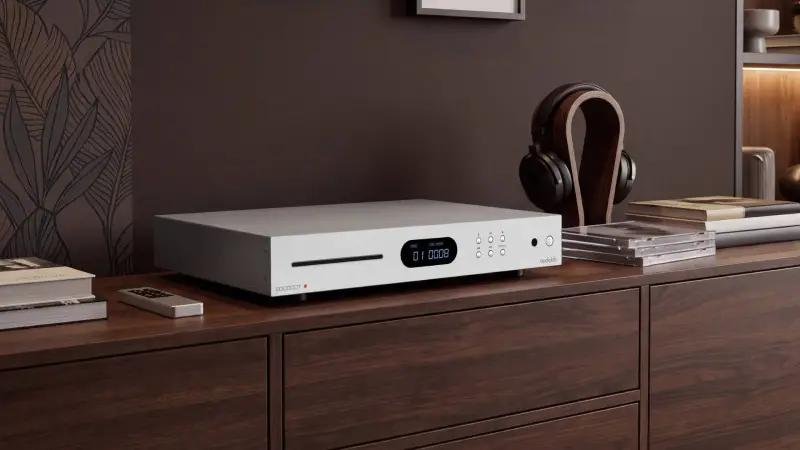
A dedicated CD transport gives disc playback a modular signal path: the transport reads the disc and sends digital audio to a separate DAC, while the amplifier and speakers handle the rest. Audiolab’s 6000CDT MKII is built around that division of labor, with a redesigned drive intended to make disc reading stable and quiet. It’s a component for listeners who already own, or plan to assemble, a system of separate hi-fi components.
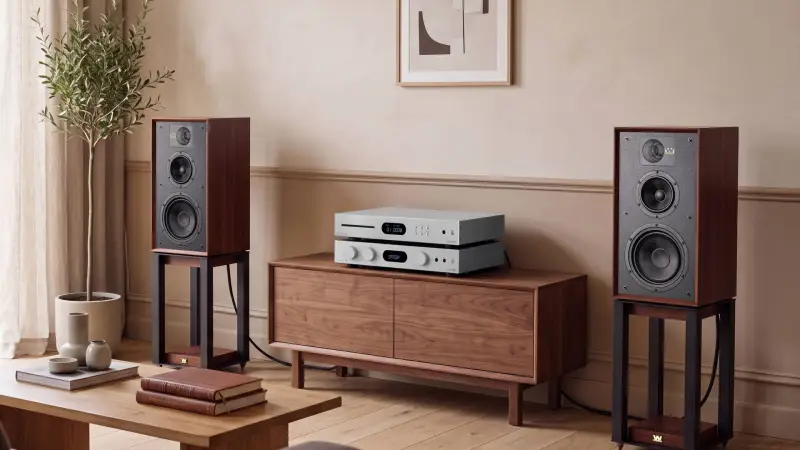
A transport needs a DAC downstream
The 6000CDT MKII isn’t a complete CD player. It has the drive and controls for playing a disc, but no digital-to-analog converter. A DAC is needed to turn the digital signal from the disc into an analog output that an amplifier can use. The amplifier and speakers are separate purchases too, unless they’re already part of the listener’s setup.
That requirement gives buyers a choice Audiolab’s transport doesn’t make for them: which DAC and amplification to use. For listeners who prefer separates, that can make it easier to shape a system around existing components or change one part of the chain later. The tradeoff is practical: the transport alone won’t produce sound through passive speakers, and the total system cost depends on the other equipment needed to complete it.
Audiolab also positions the separation as a way to keep the disc-reading hardware apart from other electrical components. The company’s rationale is that a transport dedicated to reading discs can provide a clean, stable read, while the DAC and amplifier take care of conversion and amplification. That’s the design intent; the available specifications don’t include measurements that quantify any audible benefit.
Redesigned drive, familiar disc formats
Audiolab says it rebuilt the 6000CDT MKII from the original model, revisiting the laser, spindle and disc loader for stability, consistent operation and lower mechanical noise. The laser correction system is designed to compensate for irregularities in disc rotation while avoiding unnecessary corrective actions. In a transport, those mechanisms are central to the job: the unit has to read the data reliably as the disc spins, then deliver it to the separate DAC.
The company’s description emphasizes quiet, consistent operation and protection for discs while they’re inside the machine. It doesn’t provide specific noise figures or describe a measured reduction in disc wear, so those claims are best understood as design goals rather than quantified performance results. For anyone comparing transports, the concrete points here are the redesigned drive assembly and the formats it supports.
The 6000CDT MKII handles standard CDs, along with CD-R and CD-RW discs. That broader compatibility can matter to listeners with home-burned collections, since support for recordable and rewritable media varies between players. The announcement doesn’t specify further format support, so buyers should check whether their library depends on anything beyond those three disc types.
Price and system matching
Audiolab plans to put the 6000CDT MKII on sale at the end of November for £399. The approximate conversions given are $540 and AU$800, with exact global pricing still to come. That’s the cost of the transport itself; anyone building a system from scratch will also need a DAC, an amplifier and speakers.
Audiolab’s 6000A MKII amplifier is one possible match. It includes a built-in DAC, so pairing it with the transport would cover both digital conversion and amplification in the same component. The transport can also be used with a DAC and amplifier from other makers, which keeps the system open to different equipment choices.
For current owners of a suitable DAC and amplifier, the main question is whether a dedicated transport’s drive design and format support fit their listening habits. For new buyers, the more useful calculation is the cost and footprint of the complete playback chain. The 6000CDT MKII makes the most sense as one considered piece of a separates system, with the DAC choice and speaker setup shaping the rest of the experience.


