Sony MDR-3R Revives Its 1979 Headphone Design With USB-C and an Inline Remote
Sony’s 38g MDR-3R pairs a near-original 1979 design with USB-C, call controls and two sets of foam pads, including a Stranger Things edition.

Sony’s MDR-3R brings back the look of its 1979 MDR-3 headphones while changing the connection and adding controls for modern phone use. The 38g wired pair ends in USB-C instead of a 3.5mm plug, and its cable carries a microphone and three-button remote. For listeners who want the old silhouette without giving up call handling and playback controls, that’s the practical appeal; the more consequential question is how its revised drivers sound.
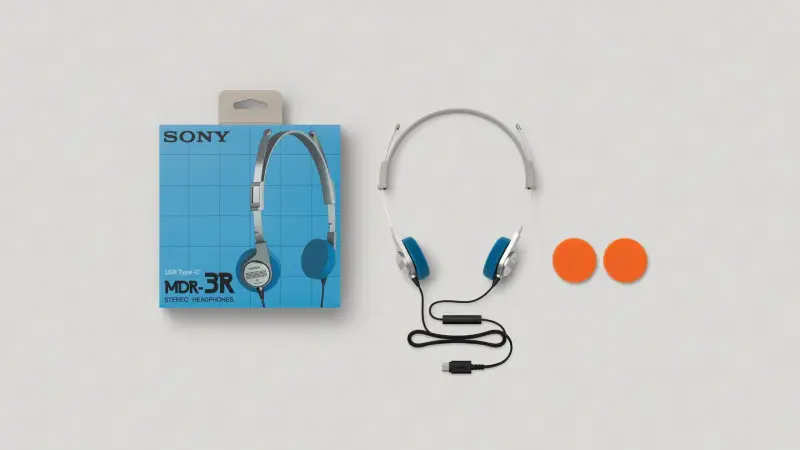
The MDR-3R is built around a design that Sony says is almost unchanged from the original. Its aluminium frame keeps the distinctive bend above each earpiece, along with the square slider hinges, soft plastic flexible adjuster across the headband and small openings Sony calls “sound holes.” The logo and overall outline also follow the earlier model. Sony’s packaging takes a similar route, echoing the light-blue geometric look of the 1979 box with updated production methods and sustainability considerations.
That close visual match makes the altered plug stand out. The original model belongs to the era of portable cassette players and headphone jacks; the MDR-3R’s USB-C connection is intended for compatible modern devices. There’s no 3.5mm termination, so buyers should check their playback gear before choosing it. In practice, the cable means there’s no wireless pairing step or battery to charge, but the USB-C connection also ties use to devices with a suitable port.

A familiar frame, with updated controls
Sony says its engineers returned to hand-drawn diagrams from the 1970s when working on the MDR-3R’s 23mm drivers. The company describes the original headphones as having “surprisingly good” sound and says it has worked from their analog character, seeking a wider frequency range, particularly in the bass. Those are Sony’s claims; no frequency-response figures or independent listening results are provided here, so the real test will be whether the revised tuning holds up in use.
The inline remote adds a small but useful set of functions. Separate buttons raise and lower volume, while the central play/stop control handles playback and calls. Double-pressing it skips forward; triple-pressing skips back. A press answers or ends a call, and holding the control activates the phone’s voice assistant. The microphone brings hands-free calls to a design originally made for listening to portable music, without changing the headphones into a wireless product.
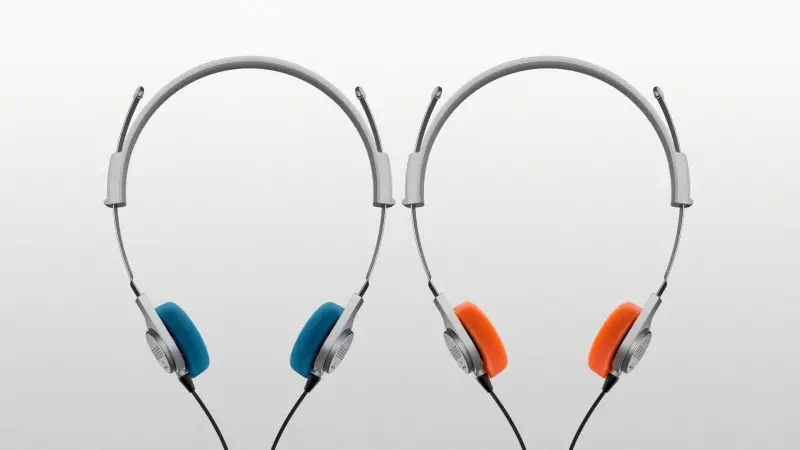
At 38g, Sony calls the MDR-3R the lightest over-ear headphones in its current lineup. That low weight and the folding-style hinges suggest a design meant to travel easily, although the provided details don’t specify a carrying case or describe how the headphones fit over longer sessions. The foam pads are another point of continuity: the box includes both blue pads, matching the original look, and orange pads associated with the Sony headphones seen in Guardians of the Galaxy.
Two versions, two visual directions
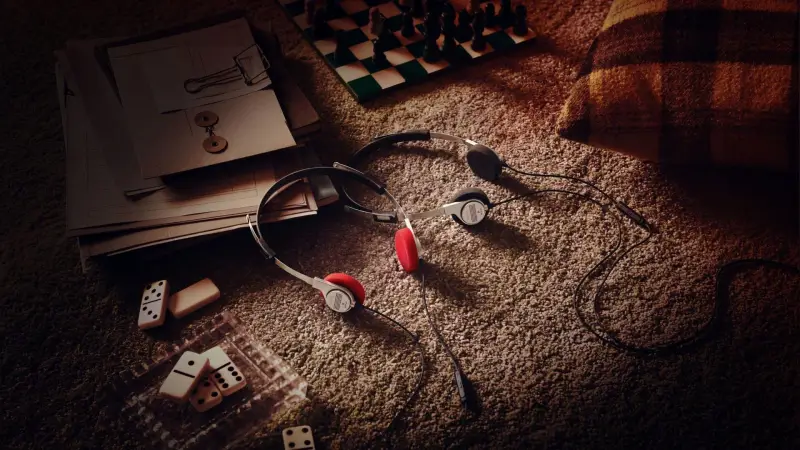
The standard MDR-3R keeps the period-inspired blue and orange palette and costs $59 / £49 / €59 / AU$89.95. Sony also offers a Stranger Things edition at $79 / £59 / €69 / AU$99.95. That version has a black headband with the show’s logo and red foam pads, with black pads included in the box. The premium is $20 in the US and £10 in the UK, while the euro and Australian price differences are €10 and AU$10.
Sony’s timing taps into renewed interest in wired, physical music products, a direction other brands are also exploring with more affordable wired listening options. For buyers, the MDR-3R’s place in that category comes down to a specific mix: a highly recognizable frame, a wired USB-C connection, a mic and remote, and interchangeable foam pads. It won’t suit a setup that depends on a 3.5mm output without an appropriate adapter, but for a compatible phone or other USB-C source, it offers direct playback and call control in a particularly light package.
The design’s familiarity is the hook; the changed connection and remote are what make it workable for present-day listening. Before buying, check that USB-C audio works with the intended device, then wait for detailed listening impressions to establish how much the driver changes affect the promised bass and frequency range. Sony’s price and included pad options make the standard model the straightforward pick for the 1979 look, while the themed version puts its visual identity front and center.


