Kraxton Labs Master QC Checks Audio, Atmos ADM and Picture Deliverables
Master QC brings stem, loudness, Atmos ADM and picture checks into one macOS workflow, with traceable reports and a $449 launch price.
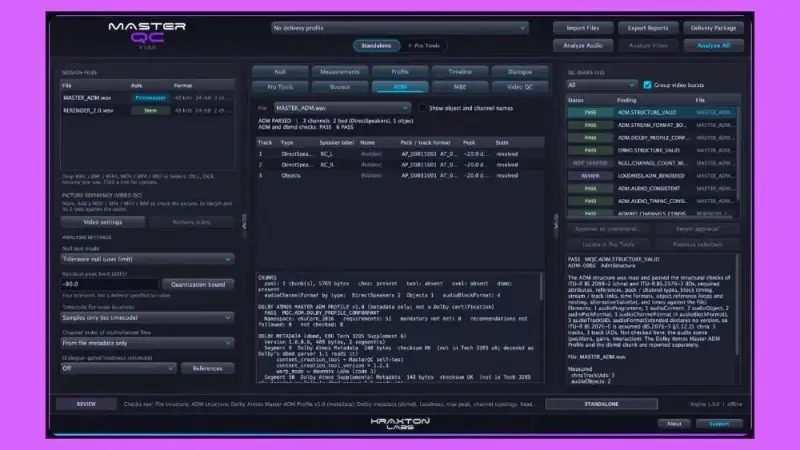
Master QC brings several post delivery checks into one macOS application: comparing stems with a printmaster, measuring loudness, inspecting Dolby Atmos ADM metadata and scanning picture files. Kraxton Labs says the software runs locally, with no media or project files uploaded. For facilities juggling separate utilities and manual checklists, its practical draw is a single findings view that links each result to a delivery requirement.
The application is sold as a perpetual licence. Its launch price is $449, reduced from $599 until 31st December. Kraxton Labs already makes tools for dialogue conforming and AAF processing, so Master QC extends that post production focus into final delivery verification.
Audio checks tied to the timeline
At the centre of the audio workflow is a null test: Master QC sums the supplied stems, subtracts that sum from the printmaster and displays the residual channel by channel. Users can set a tolerance, while discrepant sections are shaded to the sample. That makes it easier to locate where a stem balance, edit or render may differ from the approved master, instead of relying on a whole-file pass or a single listening check.
A sample-accurate timeline gathers the QC markers in one view. During playback, users can switch between the printmaster and the stem sum, while live short-term and integrated loudness, loudness range (LRA), true peak and null-residual lanes remain visible. The combination gives an operator a way to move from a flagged point to the relevant audio and assess what the measurement represents in context.
The software includes 21 delivery profiles. Named examples include EBU R 128, ATSC A/85, ARIB TR-B32, Free TV OP-59, AES TD1008, Netflix Sound Mix, Dolby Atmos Master ADM and EBU R 103. A profile organizes requirements into findings that show status, measured value and the applicable source clause. Specifications can also be imported from PDF, with findings linked to the relevant requirement and clause.
That traceability is useful when a delivery spec contains checks that cannot be confirmed automatically. Master QC marks those items for review instead of counting them as passed. In a handoff workflow, that gives the operator a clearer queue: measured results can be checked against thresholds, while unresolved requirements remain visible for a person to assess.
ADM and M&E review
For Dolby Atmos ADM masters, Master QC parses the chna and dbmd metadata chunks and checks them against ITU-R BS.2076 and the Dolby Atmos Master ADM profile. The application supports monitoring up to 9.1.6. Those checks give facilities a way to inspect both the file’s metadata and its audio presentation as part of the same delivery review.
The M&E forensic function compares the music and effects track with the dialogue stem and references to flag possible dialogue bleed or missing effects. Those alerts identify material to investigate; they do not remove the need to listen and decide whether a flagged sound is an error. That distinction matters for M&E work, where source material and editorial choices can make an automated warning worth checking without making it conclusive.
Picture QC and handoff options
Picture checks cover ProRes, H.264, HEVC and MXF files. Master QC checks decoding and file structure, along with frame rate, colour, HDR and timecode. It can also detect black or frozen frames and check 2-pop alignment. For a facility receiving picture alongside final audio, these checks place common technical review points in the same findings workflow as the audio tests.
Findings can be sent to Pro Tools as markers through its scripting interface. The application asks before writing markers and, according to Kraxton Labs, does not edit or save the Pro Tools session. Reports can be exported as PDF, JSON or CSV. A delivery package can include SHA-256 checksums and traceable findings, giving teams a record of what was checked and which files were included.
For supported gain and loudness adjustments, Master QC can create corrected copies while leaving the source originals untouched. That offers a route from detecting a level issue to preparing an adjusted version, while preserving the initial deliverable for reference. Users will still need to confirm that any correction suits the relevant delivery specification and project workflow.
How it fits a post facility
NUGEN Audio MasterCheck and ADPTR Metric AB cover loudness and codec preview for music, while MeterPlugs offers loudness penalty tools for streaming services, with prices starting at $50 depending on tier. The stated distinction is scope: those products do not handle ADM metadata, M&E dialogue bleed or picture checks. Master QC instead brings those areas together with stem comparison and specification tracking.
The comparison that matters most for many post houses may be with their existing manual QC pass. A dedicated operator can inspect a delivery against a checklist, while a consolidated application may reduce the number of separate tools and handoffs involved. How much time it saves will depend on the facility’s formats, specifications and review habits. A trial on real deliverables can show whether its ADM parsing and picture checks match the codecs and file structures a team regularly receives.
For studios considering the change, the useful first step is to run representative audio and picture packages through the relevant profiles, then review both automated findings and items marked for human review. That will show where Master QC can take repetitive checks out of the delivery pass and where an operator’s judgment remains part of the process.


