Łukasz Żal Wins Camerimage 2026 Golden Frog for Black-and-White Film Fatherland
Fatherland takes the top cinematography prize, with Woman Unknown and Minotaur completing a diverse camera and lens lineup.
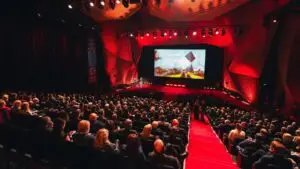
Łukasz Żal’s black-and-white cinematography for Paweł Pawlikowski’s Fatherland earned the Golden Frog at ToruńCAMERIMAGE 2026. The film was shot on the ARRI ALEXA 35, and its spare lighting approach puts control of contrast and shape at the center of the image. Jasper J. Spanning received the Silver Frog for Woman Unknown, shot on an ARRI ALEXA Mini LF, while Mikhail Krichman took Bronze for Minotaur, photographed on the Sony VENICE 2.
The three results point to different choices in sensor format, lenses and low-light work. Two of the winning films used ARRI cameras; Minotaur was the only one of the top three made with a different camera system. The awards were announced at the Closing Gala in Toruń, Poland, on November 14, at the end of the festival’s 34th edition. Film editor Joe Walker led the jury for the main competition.
Fatherland’s monochrome approach
Żal photographed Fatherland on the ALEXA 35. Pawlikowski has said most scenes were lit with a single source, a constraint that can give a monochrome image a clear hierarchy of light, shadow and faces. The production’s lenses have not been publicly identified, so the camera and lighting details offer the clearest available picture of its image-making choices.
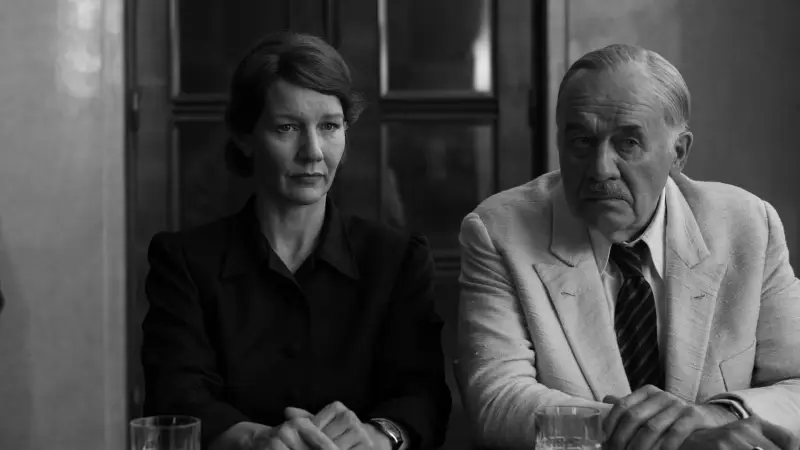
Żal and Pawlikowski have collaborated on two earlier black-and-white films, Ida and Cold War. That history gives their work together a useful point of reference: in Fatherland, the choice of monochrome is paired with a reported single-source approach across most scenes. The result makes decisions about exposure, placement and the falloff of light especially visible to the viewer.
Two different camera and lens combinations
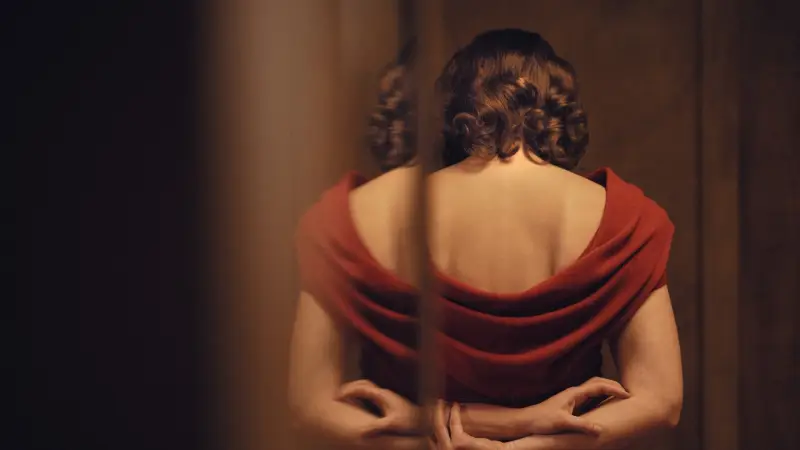
Spanning shot May el-Toukhy’s Woman Unknown on the ALEXA Mini LF. A Venice camera survey lists vintage Olympus Zuiko lenses and Petzval lenses rehoused by TLS among the production’s optics. That pairing combines a large-format digital camera with lenses from distinct design histories. The available details identify the lens types, but don’t specify which scenes used each set or how the crew divided them across the shoot.
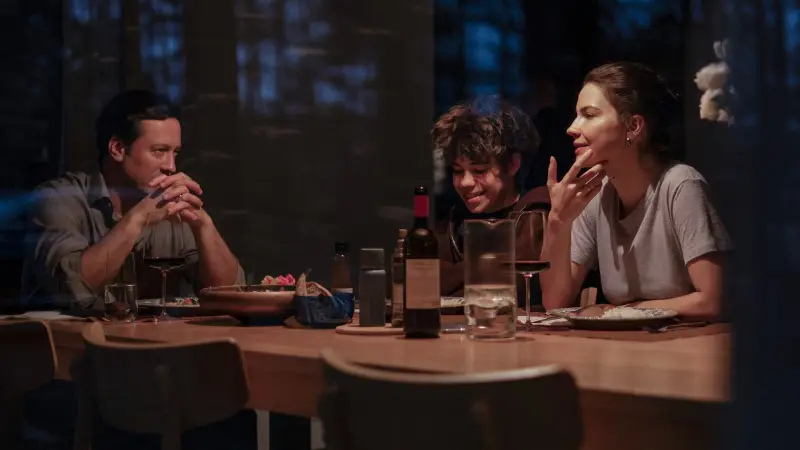
Krichman used a different route for Andrey Zvyagintsev’s Minotaur: a Sony VENICE 2 recording 8K X-OCN XT, paired with Cooke anamorphic lenses. The crew also tested the ALEXA 35 before selecting the VENICE 2. Digital imaging technician Veronica Tiron said in an interview with the French DIT association ADIT that flexibility in dark scenes informed the choice. That detail connects the camera decision to a practical production need, though the available information gives no specific exposure or noise measurements.
Other cinematography awards
The festival’s awards also recognized work across debut features, documentary, music video, television, Polish cinema and student films. Eira Wyn Jones won the cinematographers’ debut award for Effi o Blaenau, directed by Marc Evans. Kaifeng Zhong received the directors’ debut award for Atlantic Rhapsody.
Eva Kraljević won for the documentary feature To Hold a Mountain, directed by Biljana Tutorov and Petar Glomazić. Maxim Arbugaev and Vladimir Egorov received the documentary short award for Chuuraa, directed by Evgenia Arbugaev. In music videos, cinematographer Jeff Bierman and director (LA)HORDE won for Angèle and Justice’s “What You Want”; Romain Gavras received a special mention for GENER8ION’s “Storm.”
Maciej Sobieraj won the television series award for Silent Night, directed by Jan Holoubek. Alan Ruczyński was recognized for the Polish feature A Free Woman, which he co-directed with Eliza Godlewska. The Laszlo Kovacs Student Award, presented as Tadpoles, went to Francesca Avanzini for Revolver (gold), Paul Ader for Nika’s Room (silver), and Enrico Barbaro Jr. for Until We Bury Them! (bronze).
Colour grading and festival honours
The FilmLight Colour Awards were presented at the festival on November 8. The sixth edition recognized colorists across theatrical features, television, documentary, commercials and emerging talent; submissions could be graded on any platform. Greg Fisher of Company 3 won the theatrical feature category for Bugonia, his second win in that category after Poor Things. Aidan Farrell of The Farm Post Production won the television series and episodic category for Lord of the Flies, while Andu Radu of Abator took the spotlight and documentary award for The President’s Cake.
Nadia Khairat Gómez won the commercial category for The North Face’s “Defy Easy.” Imri Agmon of S EC Studio received the emerging talent award for KidSuper’s fashion film “The Boy Who Jumped the Moon.” Two Golden Frog contenders also appeared on the theatrical feature shortlist: Growth of the Soil, graded by Didrik Bråthen of TMLS, and Project Hail Mary, graded by David Cole of FotoKem.
Festival honours during the week went to Janusz Kamiński for cinematography, Darren Aronofsky for directing, Joe Walker for film editing and Hype Williams for music video. Thomas Riedel received the European Film Industry Preservation Award. The cinematography results leave a clear technical contrast for viewers to consider: an ALEXA 35 image shaped by predominantly single-source lighting, an ALEXA Mini LF paired with vintage and rehoused optics, and a VENICE 2 selected for its flexibility in dark scenes.


