New York Closes on California in Film Production Spending as Tax Credits Expand
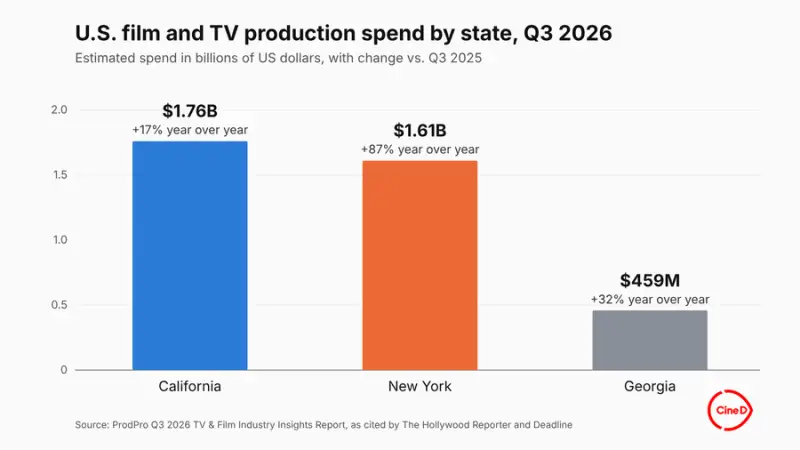
New York’s Q3 spending reached $1.61 billion, close to California’s $1.76 billion, as both states strengthen production incentives.

New York is within $147 million of California in estimated film and television production spending, sharpening competition between the country’s two largest production centers. ProdPro’s Q3 2026 figures put New York at $1.61 billion, up 87% year over year, and California at $1.76 billion, up 17%. California’s Governor Gavin Newsom proposed lifting its annual tax credit allocation from $750 million to at least $1 billion on November 2. The figures point to a contest shaped by incentives, stage capacity and the ability to keep productions returning.
ProdPro tracks scripted, live-action film and television productions with estimated budgets of at least $1 million that are commissioned by major US distribution platforms. Its Q3 2026 report, released October 15, estimates total US production spending at $4.9 billion, 17% above the same quarter a year earlier. New York has posted year-over-year growth for four consecutive quarters, starting in Q4 2025. New York City accounts for about 80% of the state’s production, according to ProdPro.
New York’s rebound has room to run
California held onto first place by a slim margin. ProdPro co-founder and CEO Alex LoVerde told The Hollywood Reporter that the New York rebound accelerated during the year, while California spending began to rise again. He said the Q3 figures came close to putting New York ahead, and identified the next quarter and 2027 as the periods to watch.
Georgia ranked third at $459 million. New Jersey, New Mexico and Illinois, which placed fourth through sixth, all recorded declines. New Jersey’s production count fell 24% year over year in Q3, even as people in the state’s production sector described its stages as full. That points to a regional capacity issue as well as a competition between incentive programs: some projects may be shifting to nearby New York while facilities elsewhere fill up.
New York’s program offers a 30% base credit, with another 10% available to qualifying projects in designated upstate counties. The state extended the program through 2036 in its fiscal 2026 budget and increased its annual allocation by $100 million to $700 million, with that additional funding reserved for independent projects. Larger productions can receive up to 10% more through the Production Plus Program.
Other changes broaden which costs qualify. New York removed the $500,000 per-person cap on eligible above-the-line labor expenses, which cover key creative roles such as actors, directors, writers and producers, although restrictions remain. The program also changed its treatment of post-production and visual effects. Music scoring qualifies for an additional 10% when at least five musicians perform the work in New York State.
For production finance, the payout schedule may matter as much as the headline percentage. Previously, credits of $5 million or more were paid over three years, a delay that could complicate financing against the expected rebate. Under the new Accelerated Recovery of Credit rule, productions can claim the full amount in the first year.
Stages, returning series and permits
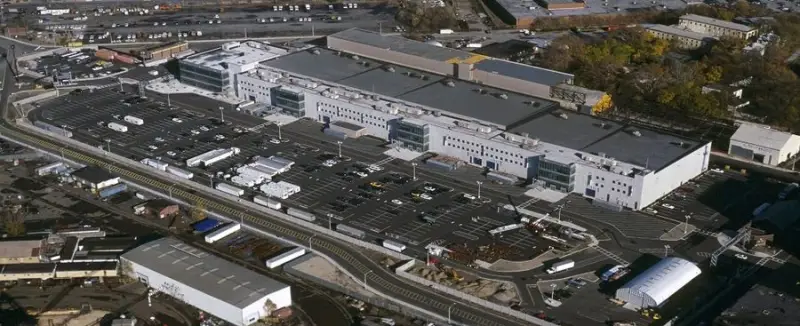
New York’s facilities are seeing strong demand. Steiner Studios chairman Doug Steiner told Deadline that the Brooklyn Navy Yard complex is booked through next summer and hosts 1,500 to 2,000 people on a typical day. Wildflower Studios in Astoria, Queens, opened in 2024; its founders say it is full and has productions waiting for space. Real estate firm CBRE counts 43% more soundstage inventory across the state than in 2020, as reported by The Hollywood Reporter.
Recurring scripted series can give facilities and crews a steadier base of work than one-off projects. This season, New York hosts CBS series CIA, FBI and Elsbeth, along with NBC’s Law & Order and Law & Order: SVU. Universal’s Miami Vice: 85 filmed in New York State and nearby New Jersey. At a screening for the fourth season of HBO’s The Gilded Age, Casey Bloys, co-chair and chief content officer of Skydance Direct-to-Consumer, said the incentive allowed the period drama to shoot about 100 days in New York State.
City film commissioner Rafael Espinal, appointed in February 2026, has also pointed to quicker permits and improved coordination between city agencies. The Mayor’s Office of Media and Entertainment reported that permits for city filming, excluding stage work, rose an average of 21% from January through September 2026 compared with the same months in 2025.
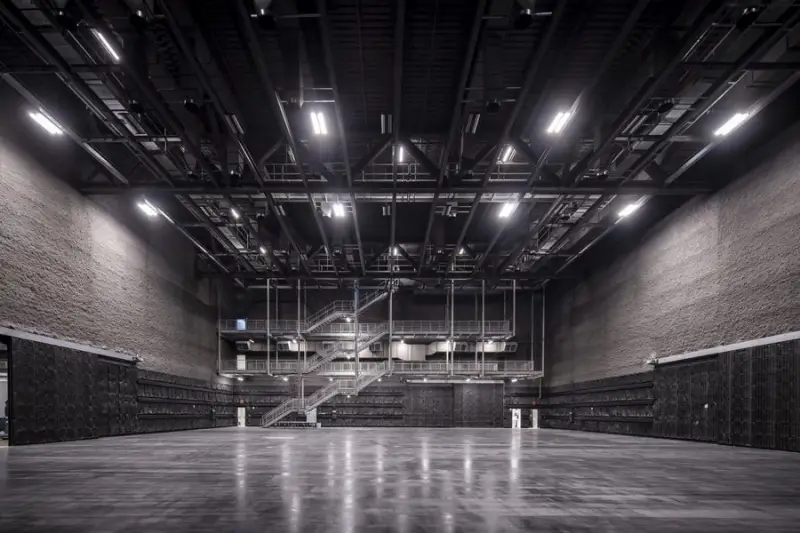
New Jersey could regain ground as planned facilities come online. Netflix is building an East Coast production hub at the former Fort Monmouth site. Paramount signed a 10-year lease at 1888 Studios in Bayonne, and Lionsgate is the anchor tenant for a Newark studio scheduled to open in 2027. Those projects could give New York’s neighbor more capacity to pursue productions now competing for space across the region.
California’s rising spend and a larger proposal
California raised its annual film and television credit allocation from $330 million to $750 million in 2025. The California Film Commission says the current program runs through June 30, 2030. ProdPro counted about 80 live-action film and television projects shot in California during Q3, and statewide spending rose 17% year over year.
Los Angeles location work gives a more mixed picture. FilmLA counted 4,171 shoot days across Greater Los Angeles in Q3 2026, down 4.8% from a year earlier. Projects using state credits accounted for 40.3% of scripted location filming, nearly twice their prior-year share, while television comedy grew strongly under the expanded rules. Commercial shoots, which don’t qualify, declined. These measures cover different activity: FilmLA counts permitted location days in the Los Angeles area, while ProdPro estimates statewide spending on productions with budgets of at least $1 million.
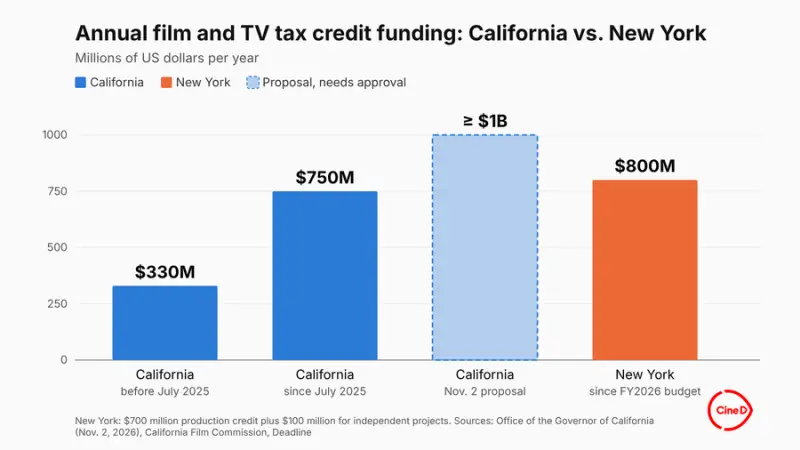
Newsom’s November 2 proposal would raise California’s annual allocation to at least $1 billion and extend the program for 10 years, through 2040, rather than five. It would make above-the-line compensation eligible, subject to funding caps, and add a 5% credit increase for companies that commit to at least two qualifying California productions. The plan also sets aside $100 million a year for independent films, $26 million more than the current amount. The governor’s office describes the proposed allocation as the largest capped film and television credit in the US.
The Legislature must approve the increase. Newsom leaves office in January 2027 after reaching the end of his two terms, so the plan will likely fall to his successor, Xavier Becerra. TheWrap reported that Becerra has said he intends to defend and expand the $750 million program, supports a federal film incentive and favors retaining an annual cap.
The governor’s office says applications for the current California program rose 82% from the prior year and that it supported more than 43,000 cast and crew jobs in its first year. Those figures come from the state. A separate federal proposal introduced in September would offer a 20% credit on labor costs, potentially rising to 30% with bonuses and combining with state credits; it has not passed.
What the numbers leave out
ProdPro’s figures are estimates, and its full state data is available to paying customers. Its production count excludes commercials, unscripted programs and projects below $1 million, all of which account for work across the industry. The proposed California expansion and the federal incentive are not in effect, so neither should be treated as money productions can currently count on.
In New York, watchdog group Reinvent Albany calculated that the state paid $1.2 billion in film and television credits in 2025 and has called for cuts. The governor’s office argues that productions would go elsewhere without the incentive. Meanwhile, stage capacity carries its own financial pressures: Deadline reported that Deutsche Bank filed a foreclosure complaint against Kaufman Astoria Studios in Queens in April after the owner allegedly defaulted on a $340 million loan.
New York hasn’t passed California yet, and California’s proposed expansion could widen the competition for projects. For producers, the practical question is how each location’s credit, payment timing, available stages and crew base fit the production’s budget and schedule. The next round of spending figures will show whether New York’s momentum can close the remaining gap.


